Blog-a-thon Sensemaking

Blogathon @ reclaim open - sphere

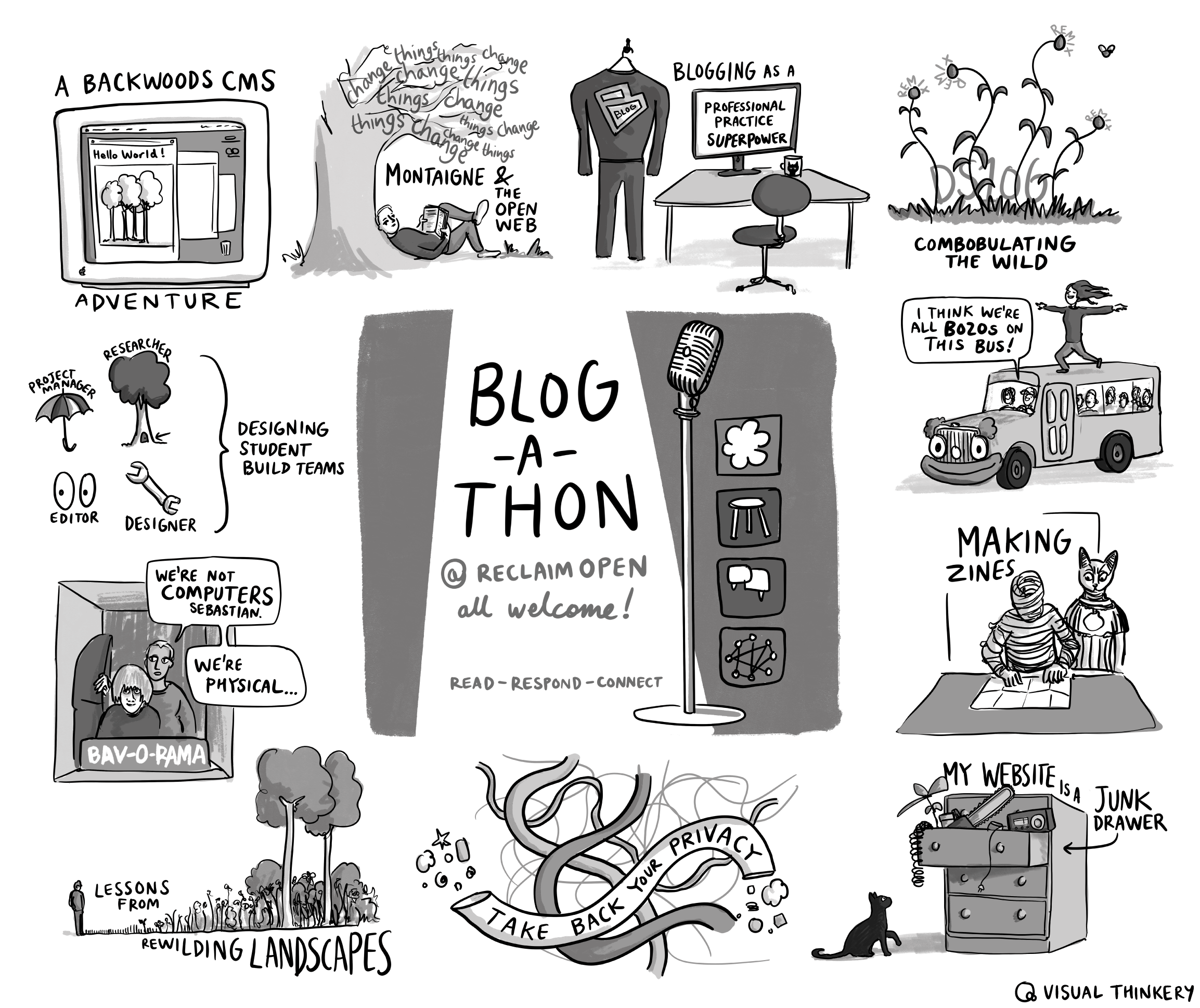
BLOG-A-THON live capture by Visual Thinkery

It’s a BLOG-A-THON…

What is a blog-a-thon? And can we make sense of it on one page?

That was the challenge that presented itself at this week’s ReclaimOpen online conference. I hadn’t quite appreciated the format until it started to unfold before my eyes – but essentially, a blog post was syndicated via the conference site every hour, with a chat available for people to comment alongside the post. This was interesting for a number of reasons. As it was an online conference, people were in all the timezones. This meant that I could come back the following morning and have a look at the posts that I missed. I could take my time, skim over some, re-read others, jump down a rabbit hole… This felt like the web that was when speeds were slow and we weren’t in the rush to make or consume content like we are today.

The blogs were all on a loose theme of rewilding the open web and I’d already created artwork for the conference having absorbed some dialogue from the organising team. I tried to capture a landscape of the blogs as they appeared, attempting to take each title, and from the blog post get a steer on what I should draw.

This was a different sense-making challenge – like making a patchwork quilt of meaning from random squares of written thought…
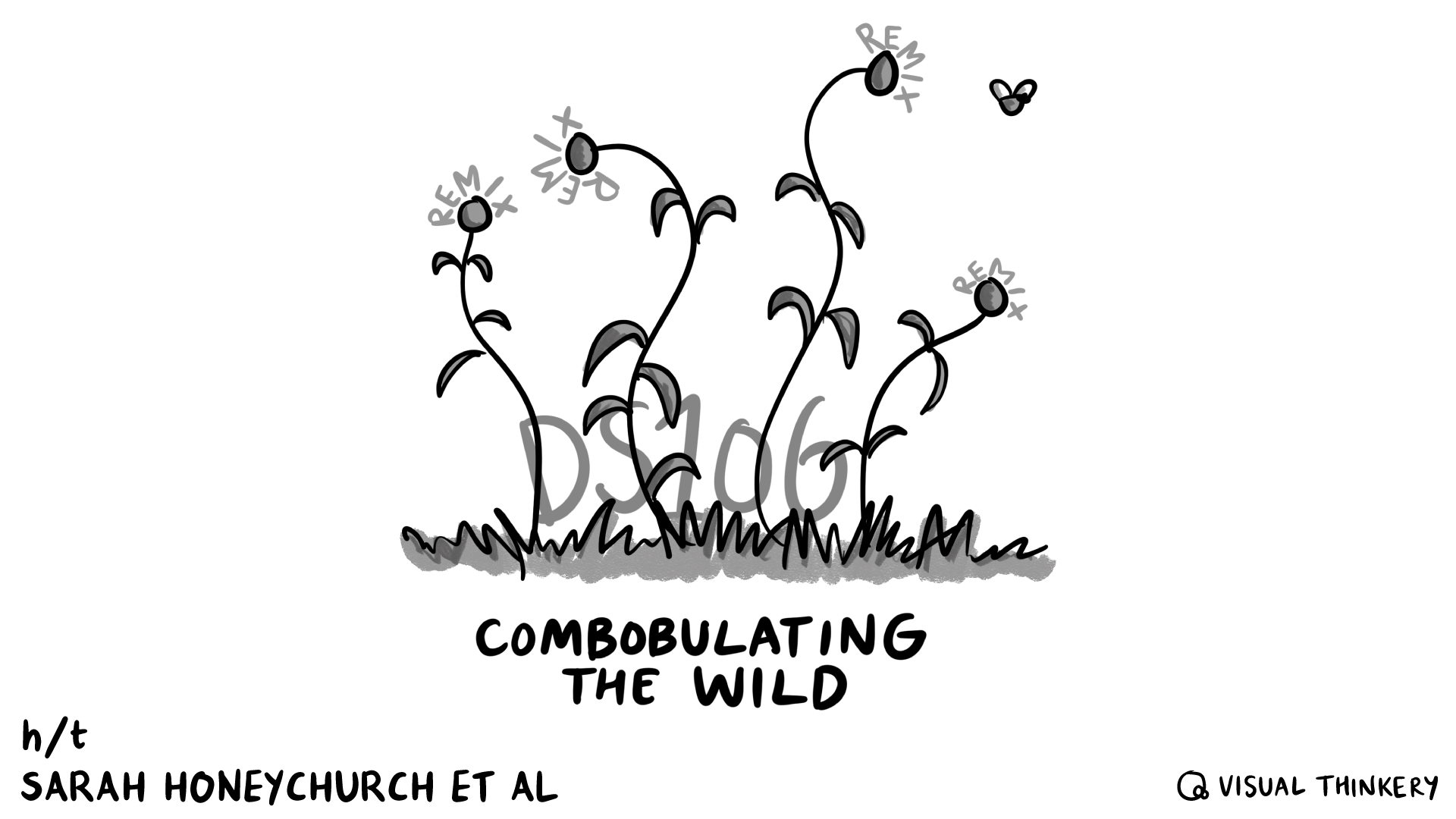
Combobulating the wild

Combobulating the Wild by Visual Thinkery for Combobulating in the #WildDS106 by Sarah Honeychurch et al.
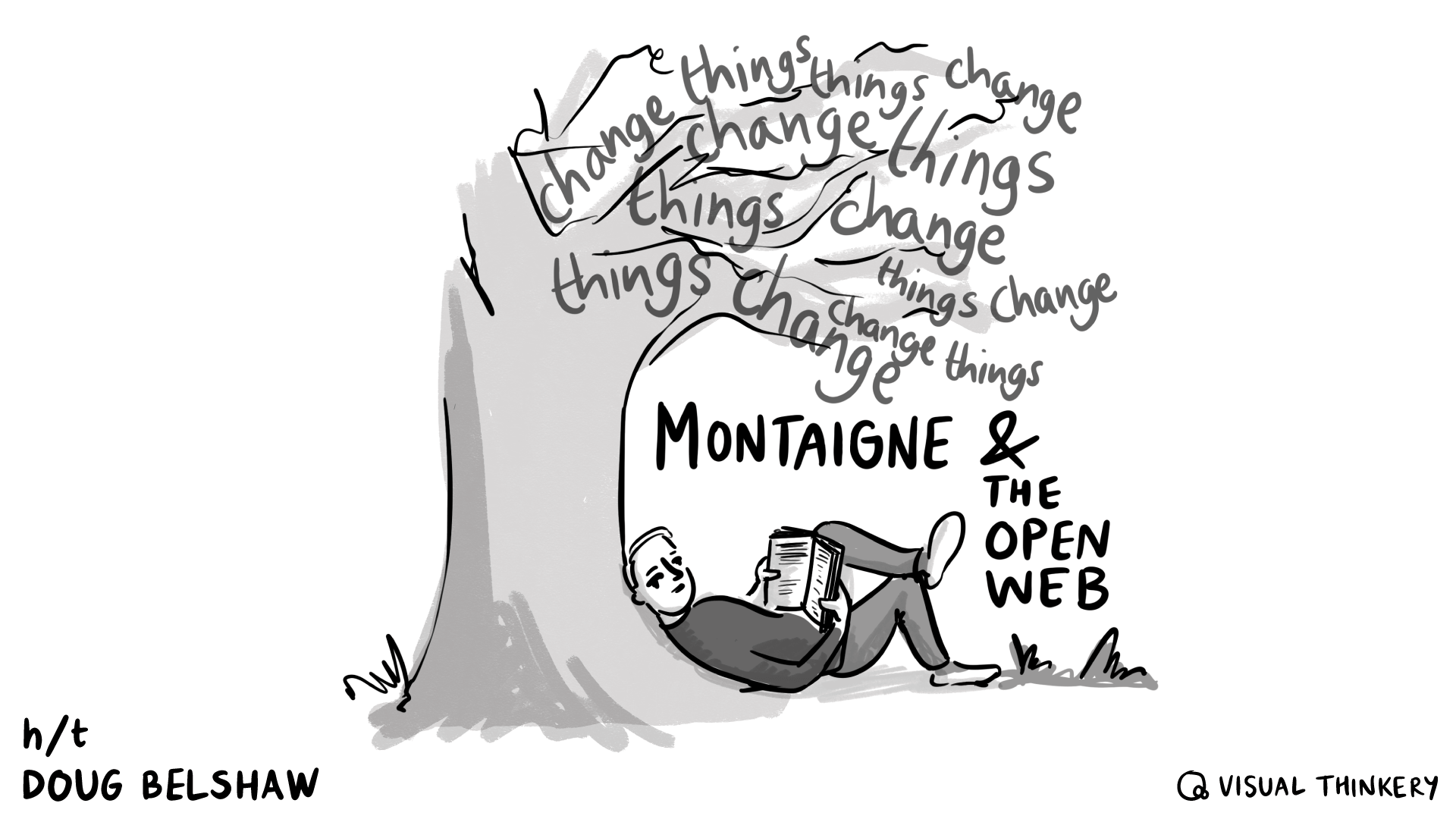
Montaigne and the Open Web

Montaigne and the open web by Visual Thinkery for Things change (or, Montaigne and the Open Web) by Doug Belshaw
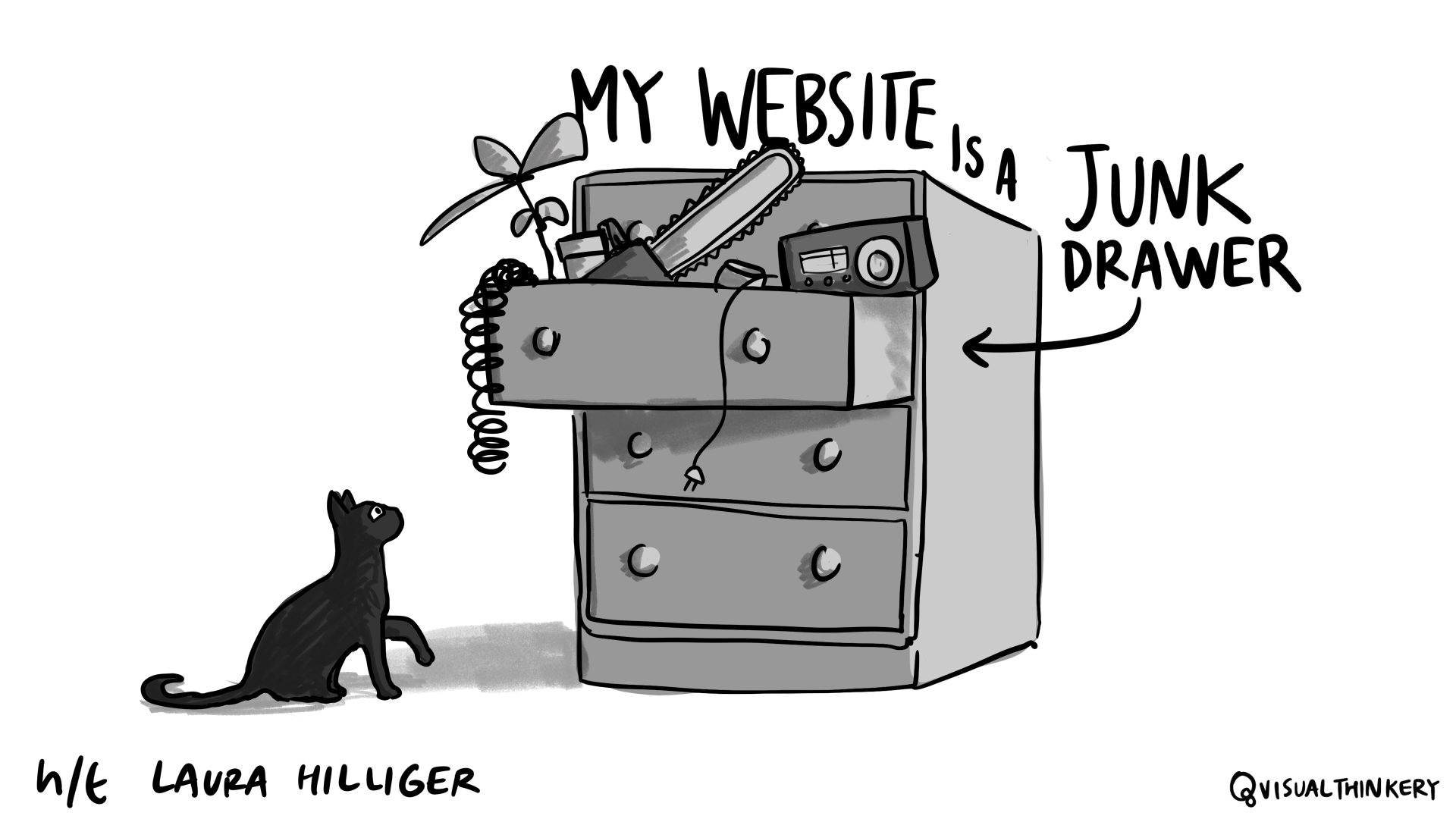
my website is a junk drawer

My website is a junk drawer by Visual Thinkery for My website is a junk drawer by Laura Hilliger
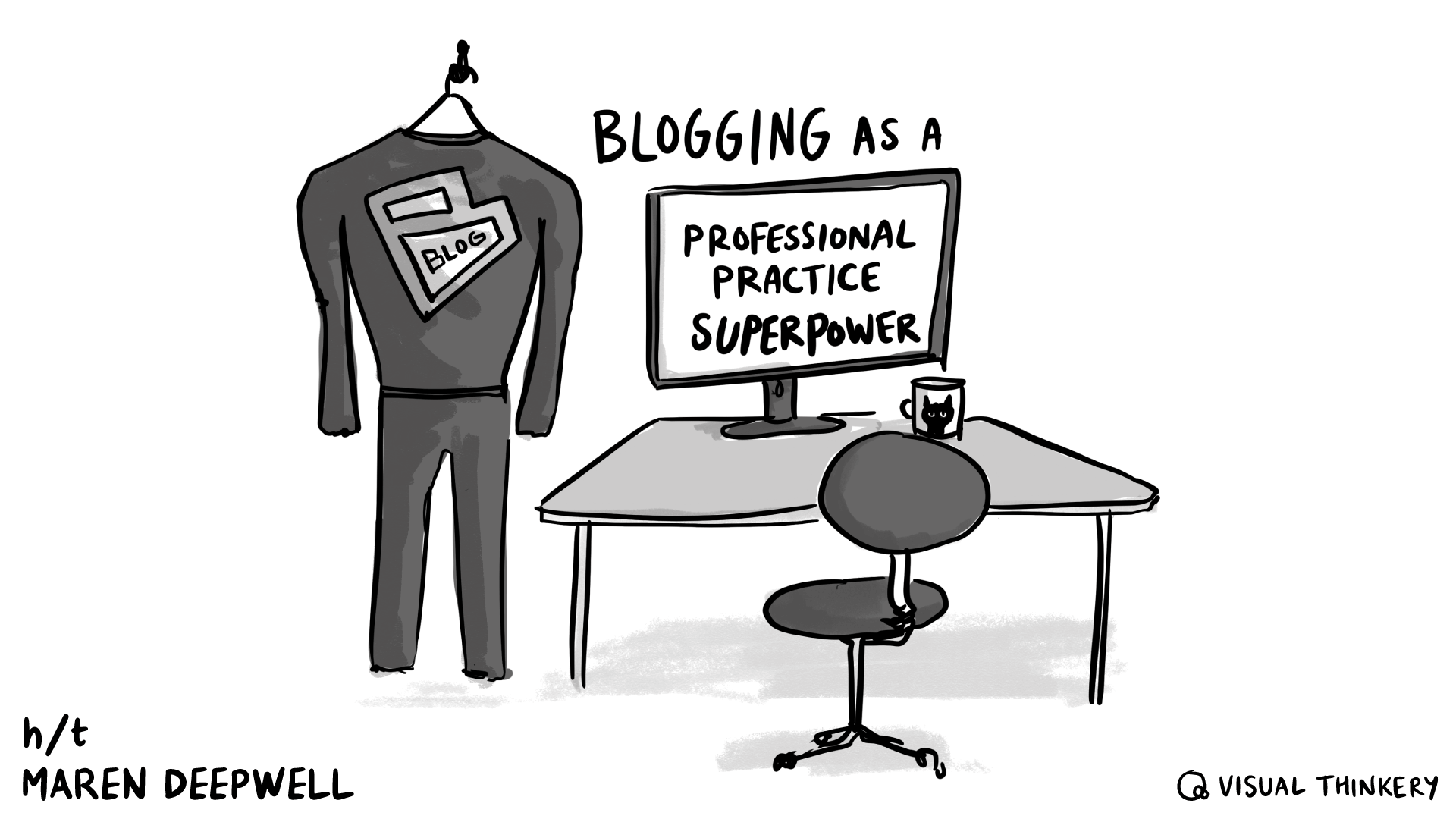
Blogging as a professional practice superpower

Blogging as a superpower by Visual Thinkery for Blogging as a professional practice superpower by Maren Deepwell
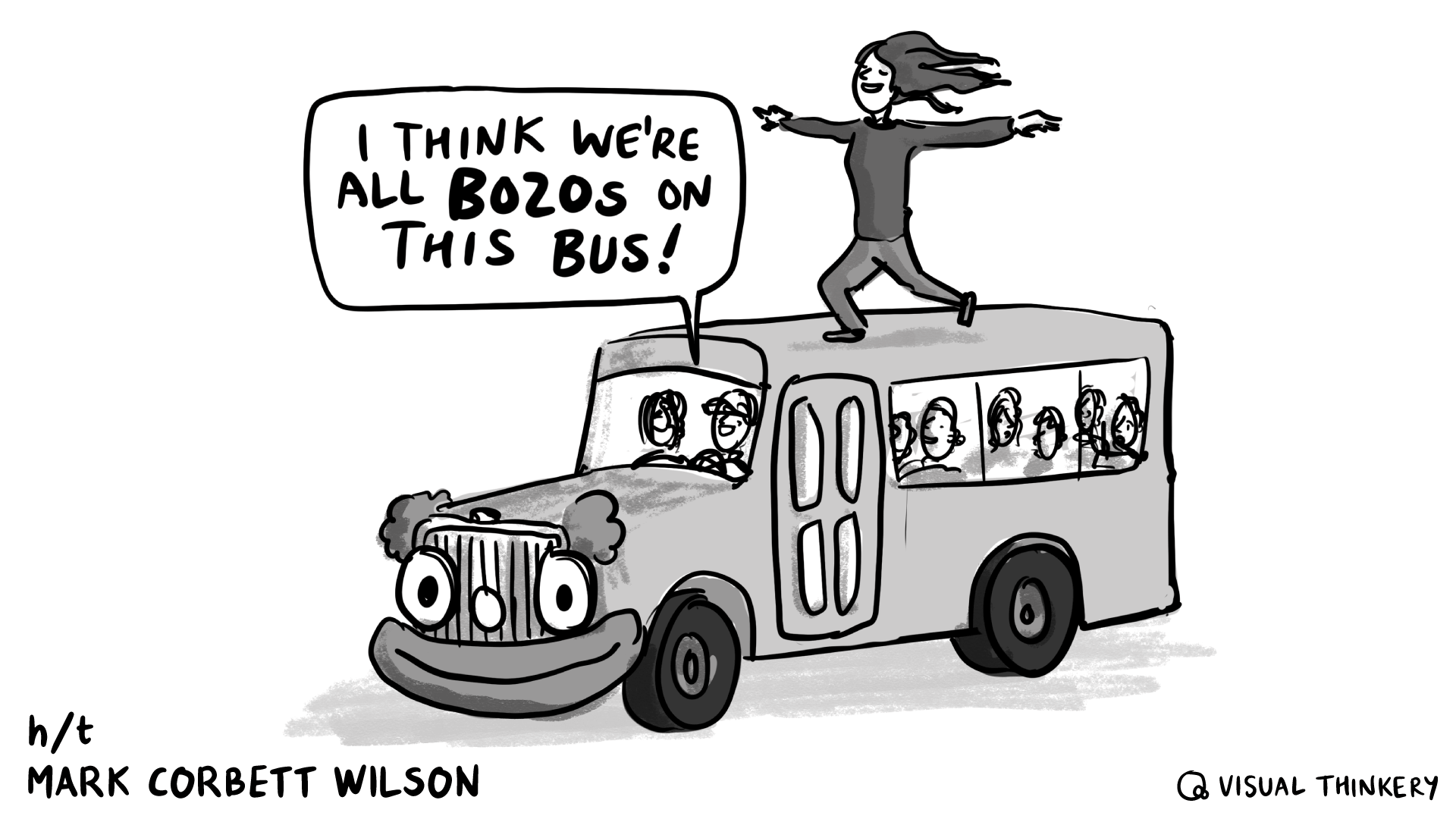
I think we are all bozos on this bus

Bozos on the bus by Visual Thinkery for  I Think We’re All Bozos on This Bus by Mark Corbett Wilson
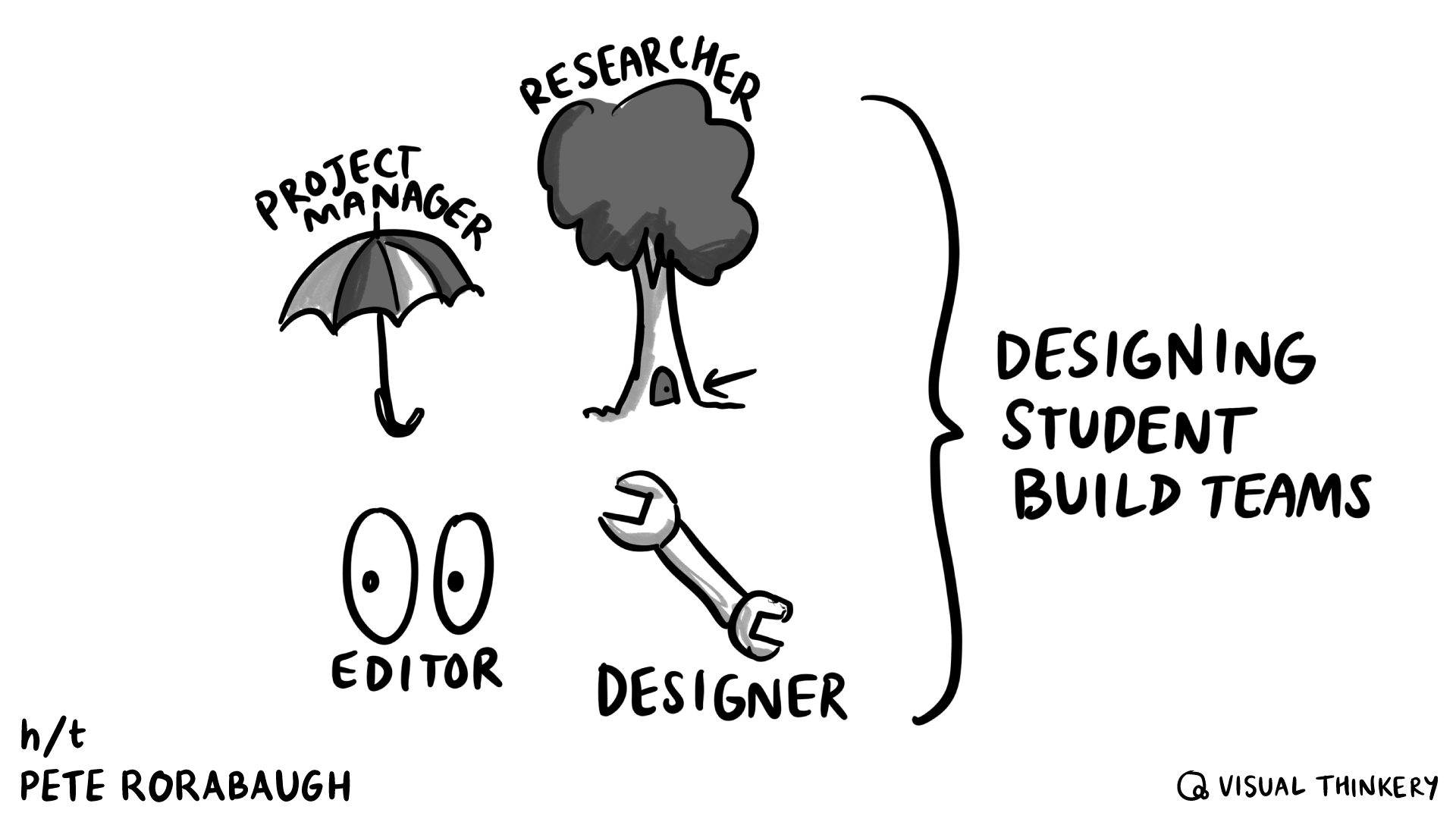
designing student build teams

Designing student build teams by Visual Thinkery for Designing student build teams by Pete Rorabaugh
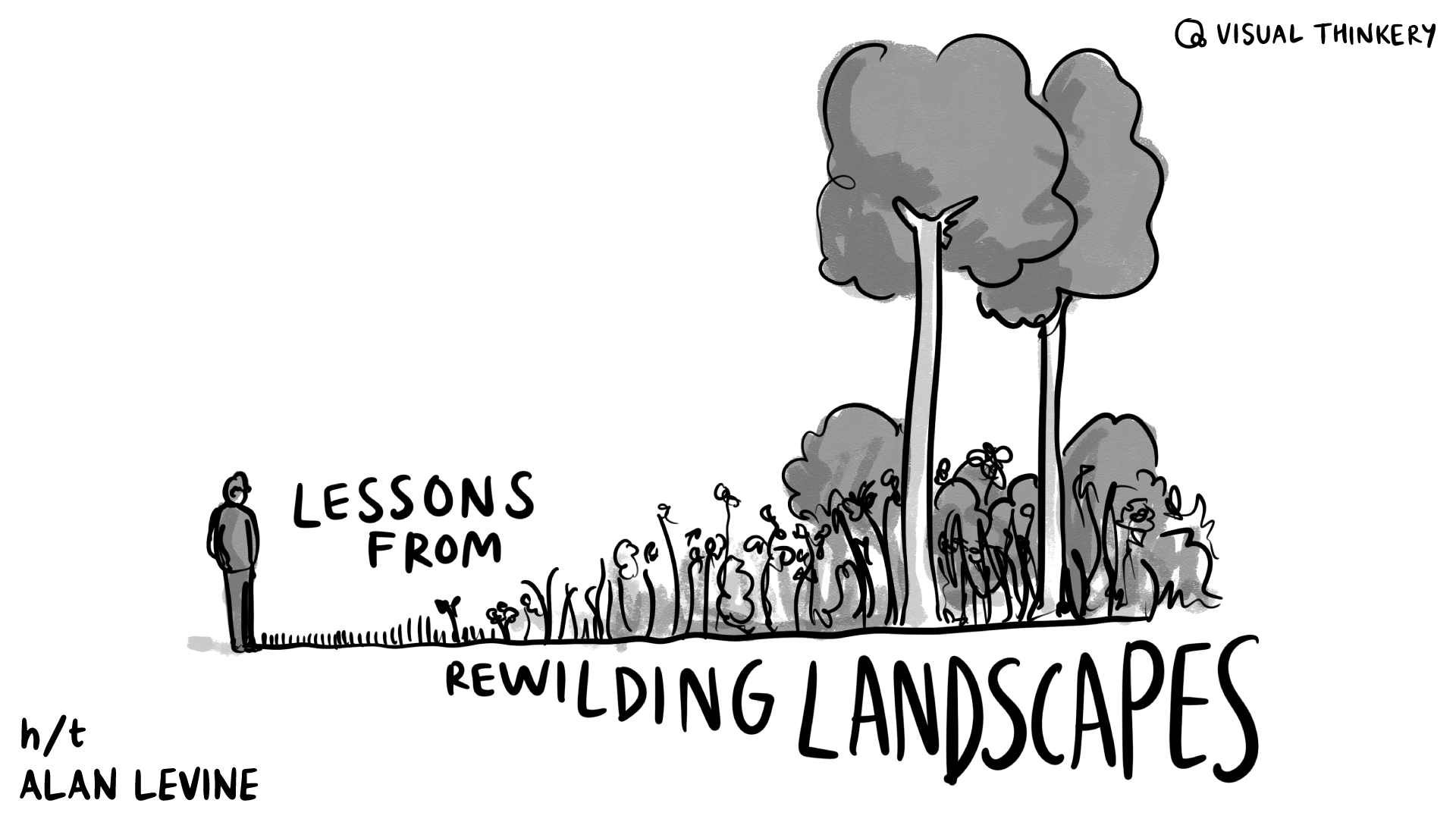
Lessons from Rewilding Landscapes

Lessons from rewilding landscapes by Visual Thinkery for Lessons from Rewilding Landscapes… in the Wild by Alan Levine
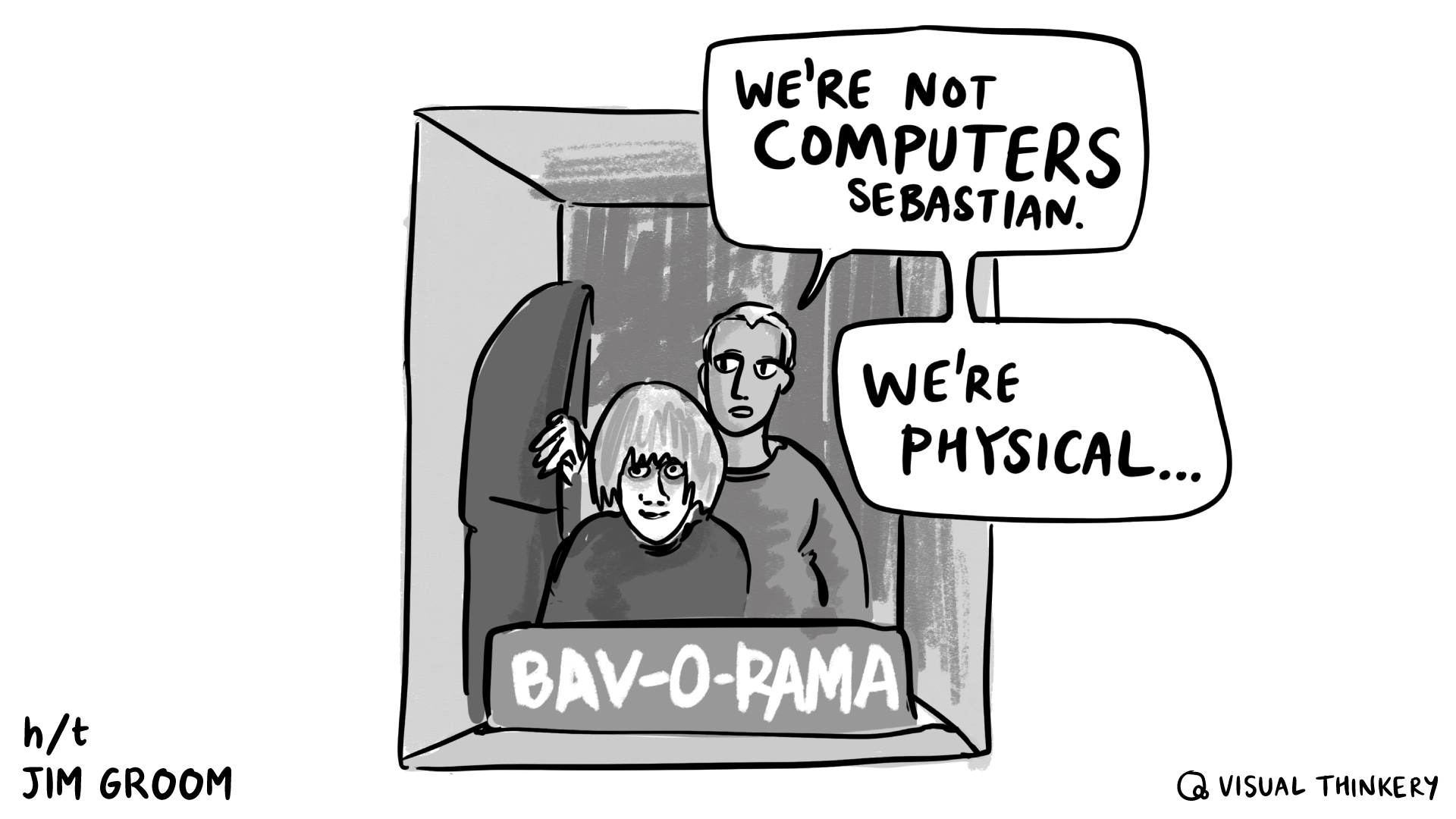
We are not computers sebastian

We’re not computers, Sebastian by Visual Thinkery for We’re not computers, Sebastian, we’re physical by Jim Groom
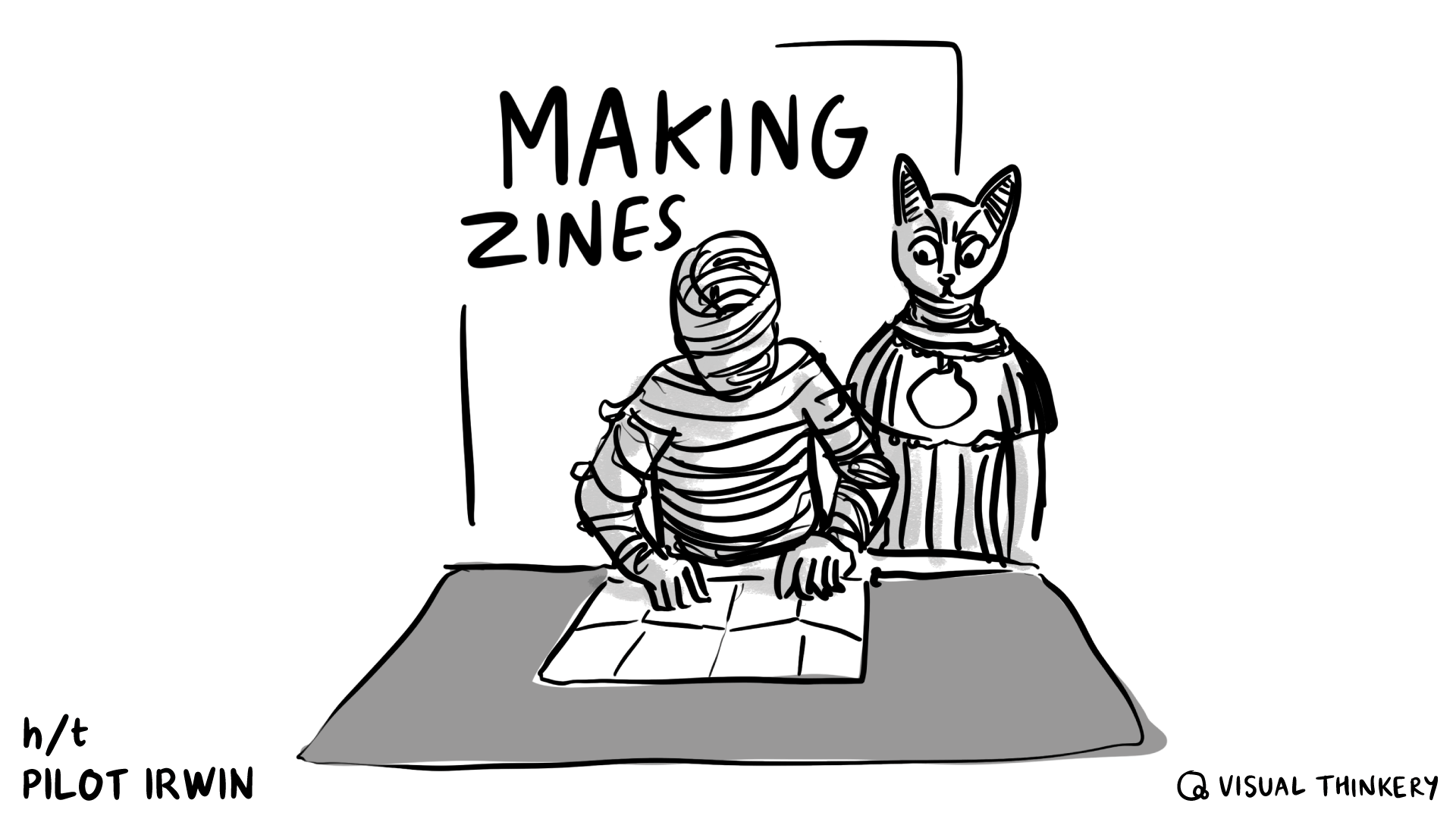
Making Zines

Open web zines by Visual Thinkery for Open Web Zines by Pilot Irwin
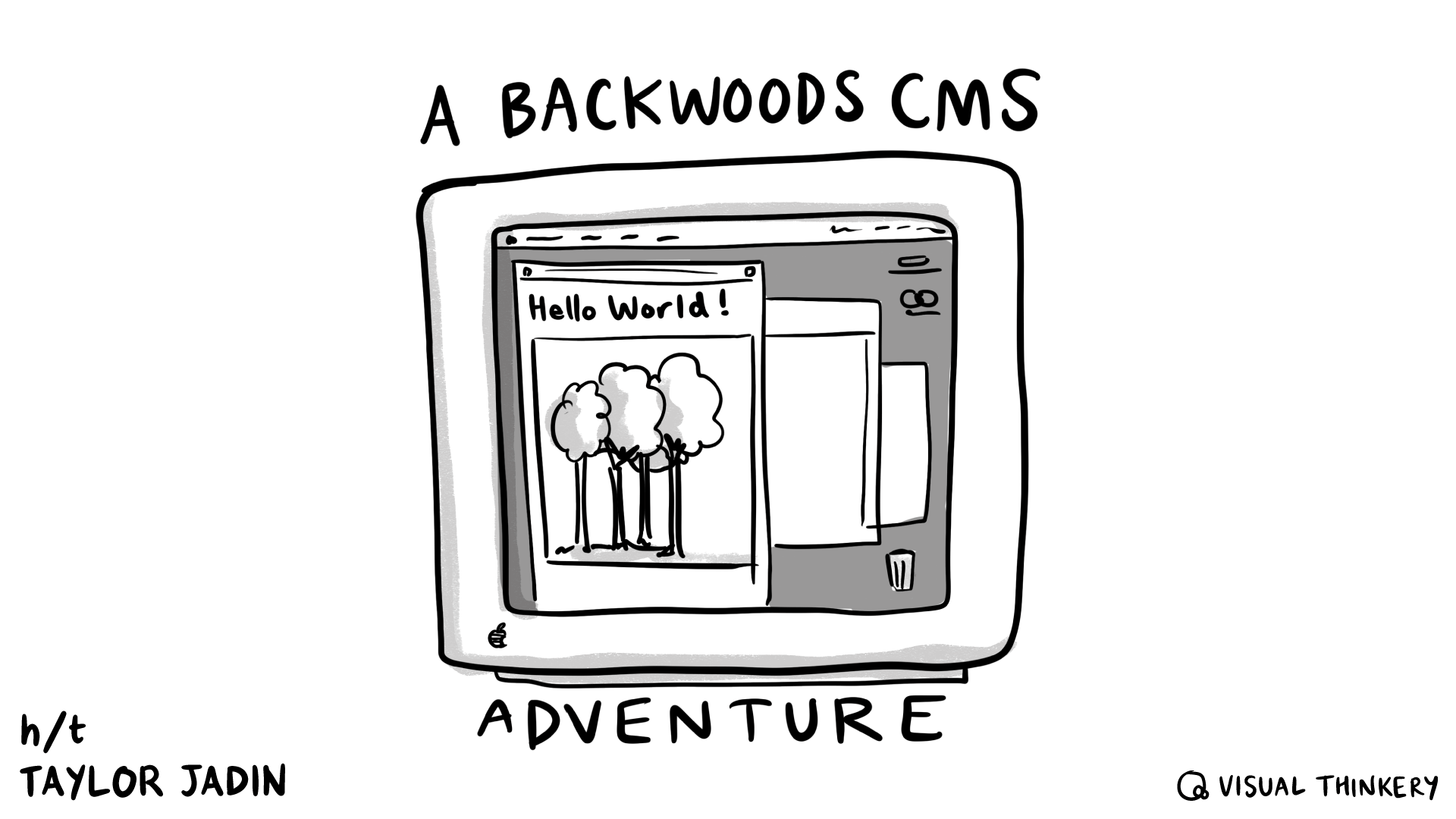
A backwoods CMS adventure

A backwoods CMS adventure by Visual Thinkery for A backwoods CMS adventure by Taylor Jadin
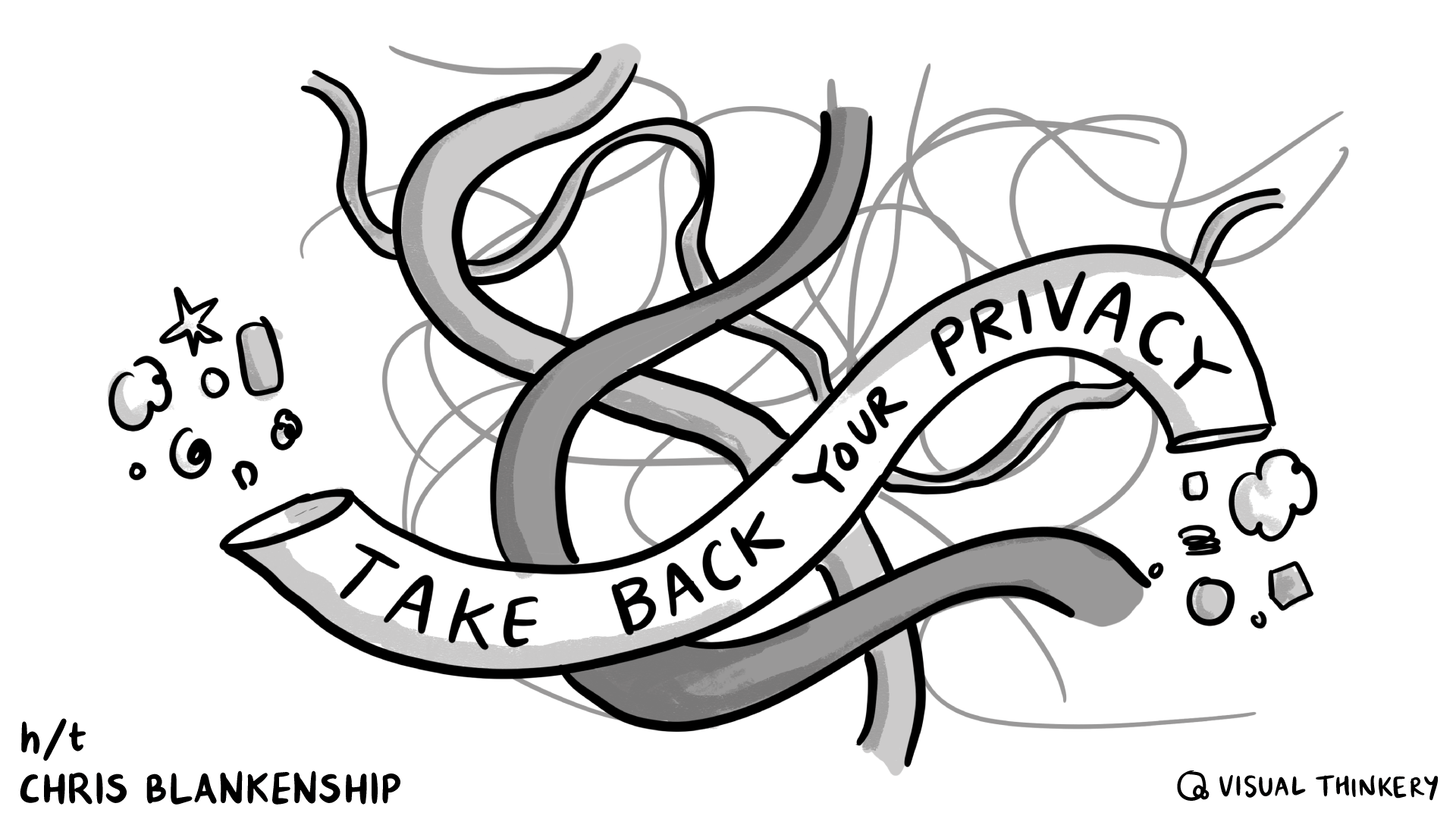
Take back your privacy

Take back your privacy by Visual Thinkery for Take Back Your Privacy by Chris Blankenship
AI and the Future of Education (webinar)

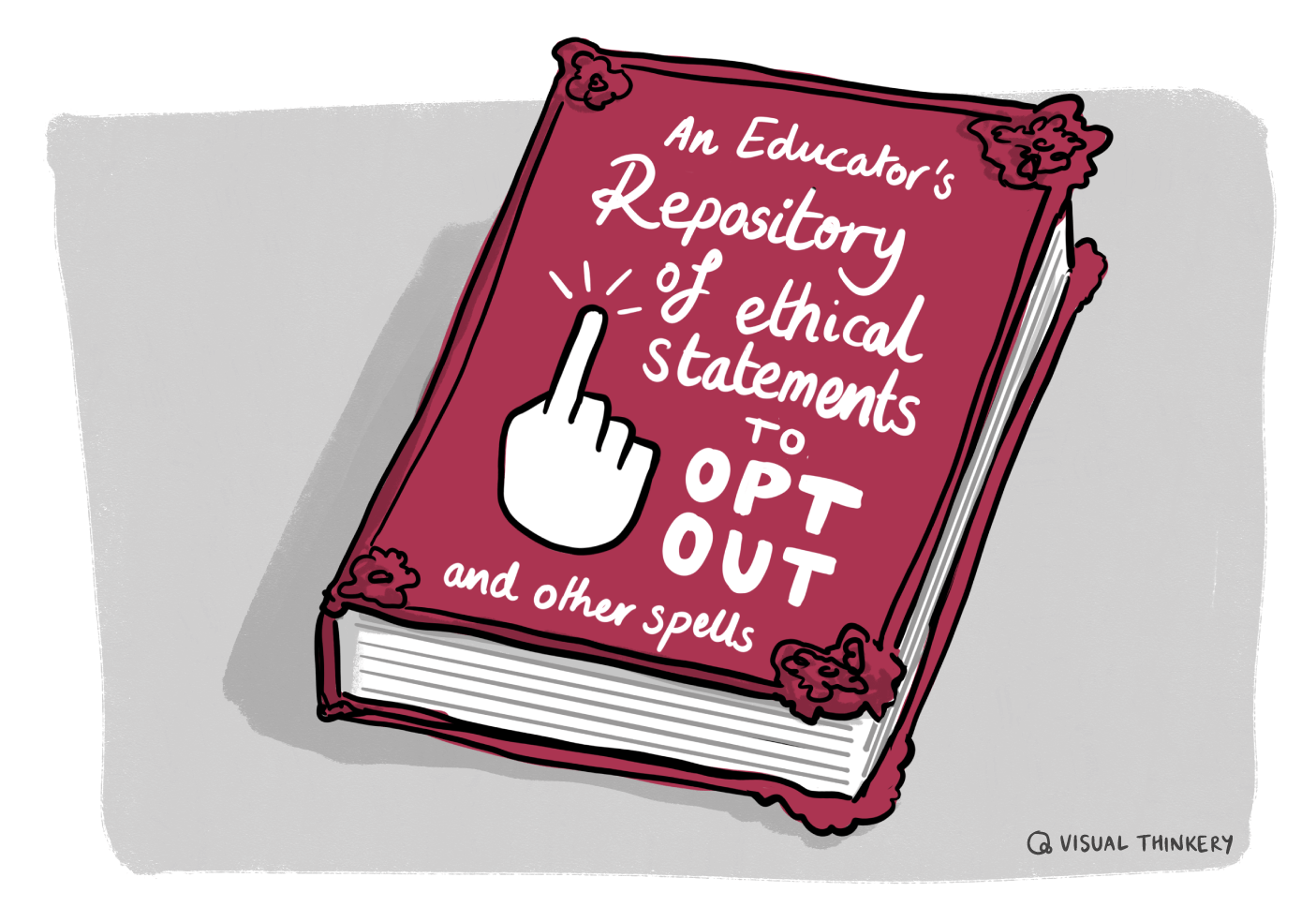
An Educator's Repository of Ethical Statements to Opt Out (and other spells)

AI and the Future of Education (webinar)

I had the pleasure of live cartooning a webinar on AI and the future of education. facilitated by Doug Belshaw and Laura Hilliger of WeAreOpen Coop. They were joined by fellow thinkers Helen Beetham, Bryan Alexander, Ian O’Byrne and Karen Louise Smith.

The conversation was harvested in real time, using the hybrid approach of capturing ideas on paper during the webinar, and then developing them further afterwards on an iPad.

Some ideas came from the panelists directly, whilst others originated from the chat.

You can use these illustrations under a CC-BY-ND licence. 🙂

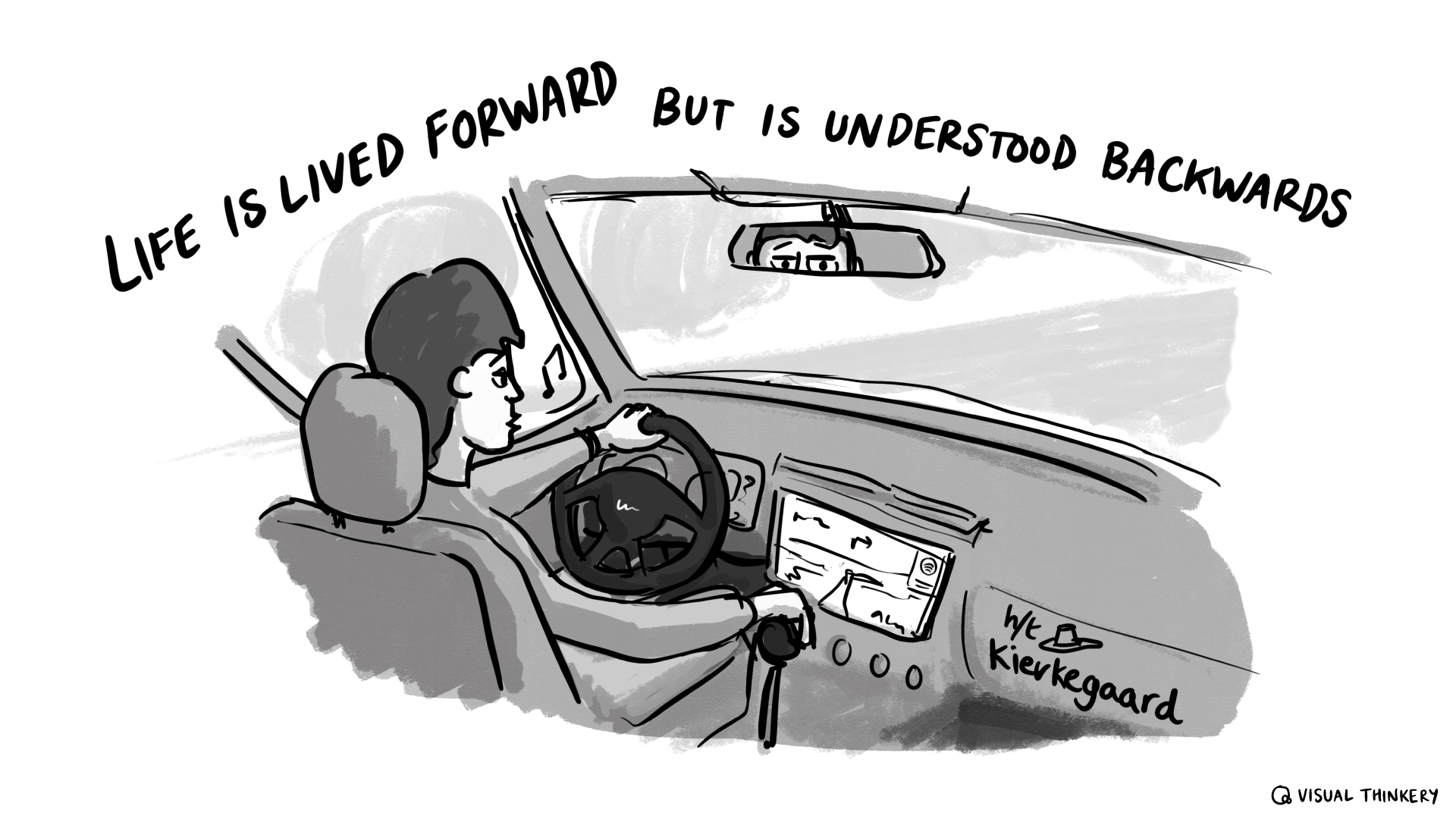
Life is lived forward but is understood backwards. A reflection on a quote by Kierkegaard.

Rear View Mirror by Visual Thinkery

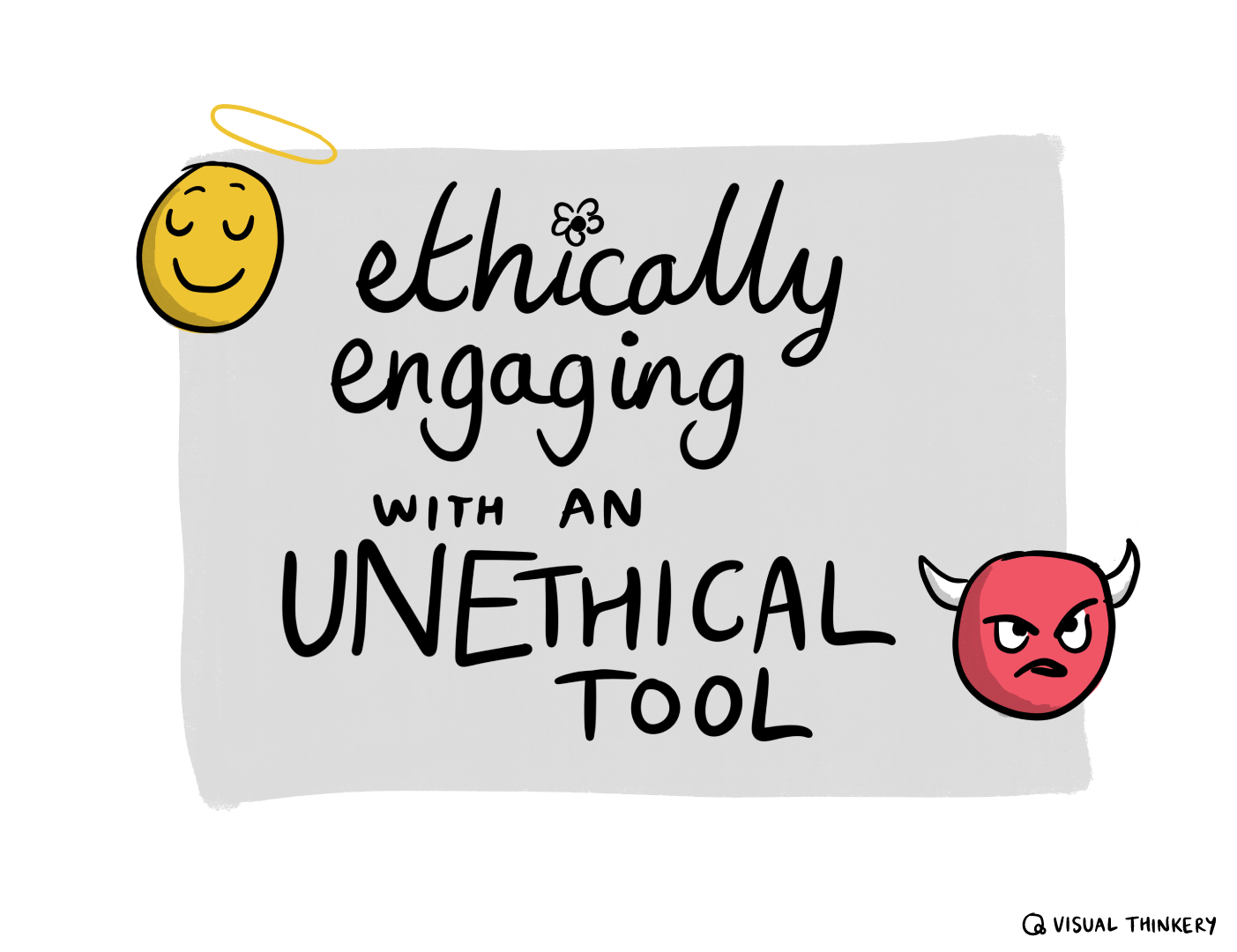
An angel emoji representing ethical engagement. A devil emoji representing an unethical tool.

 Ethically engaging by Visual Thinkery

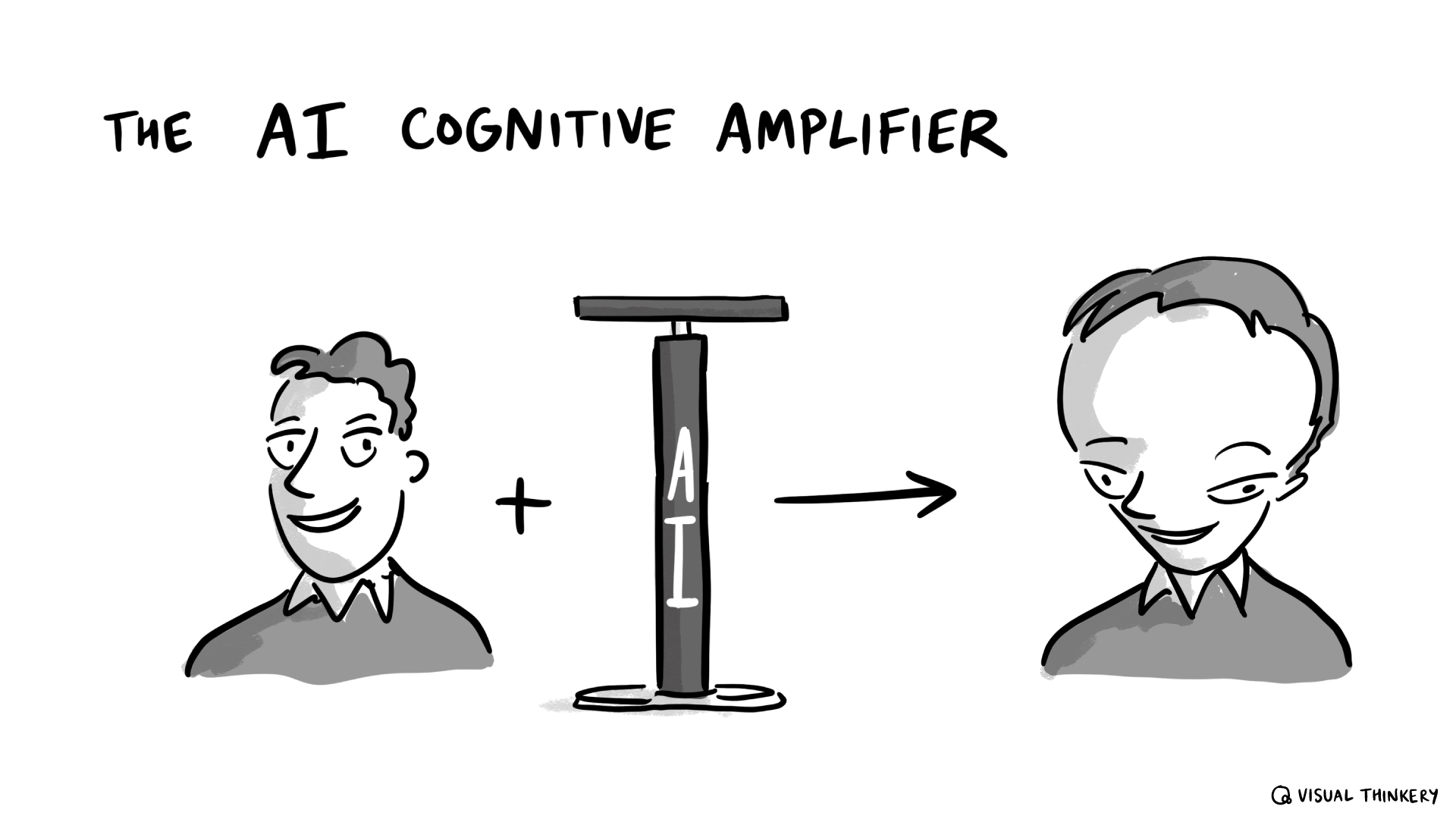
A man's head is considerably enlarged by an AI pump.

 The AI Cognitive Amplifier by Visual Thinkery

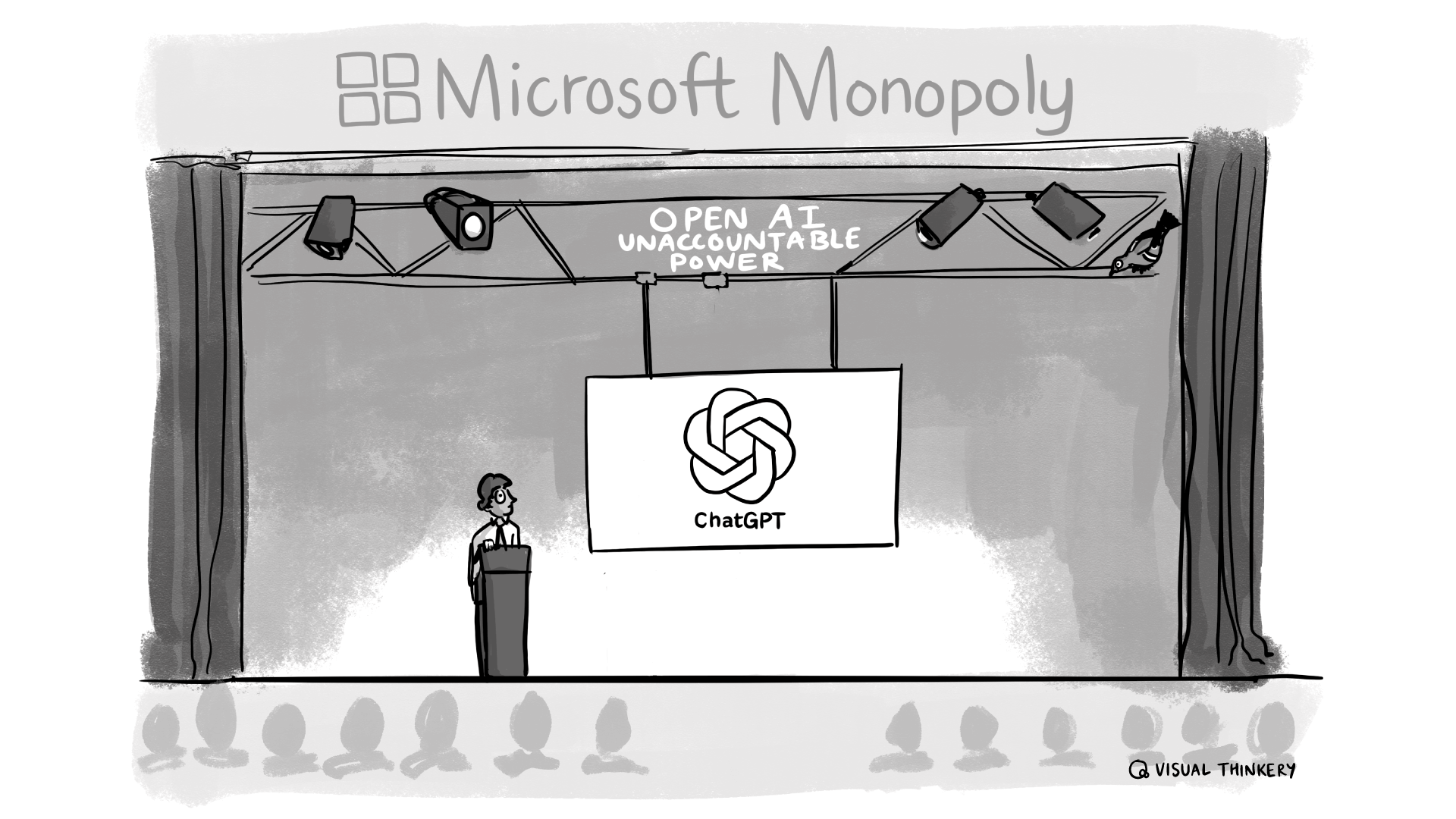
An educator makes a presentation in an assembly hall. The ChatGPT logo is connected to a rig stating "OpenAI unaccountable power" which in turn is surrounded by the Microsoft Monopoly.

 Behind the scenes of AI by Visual Thinkery

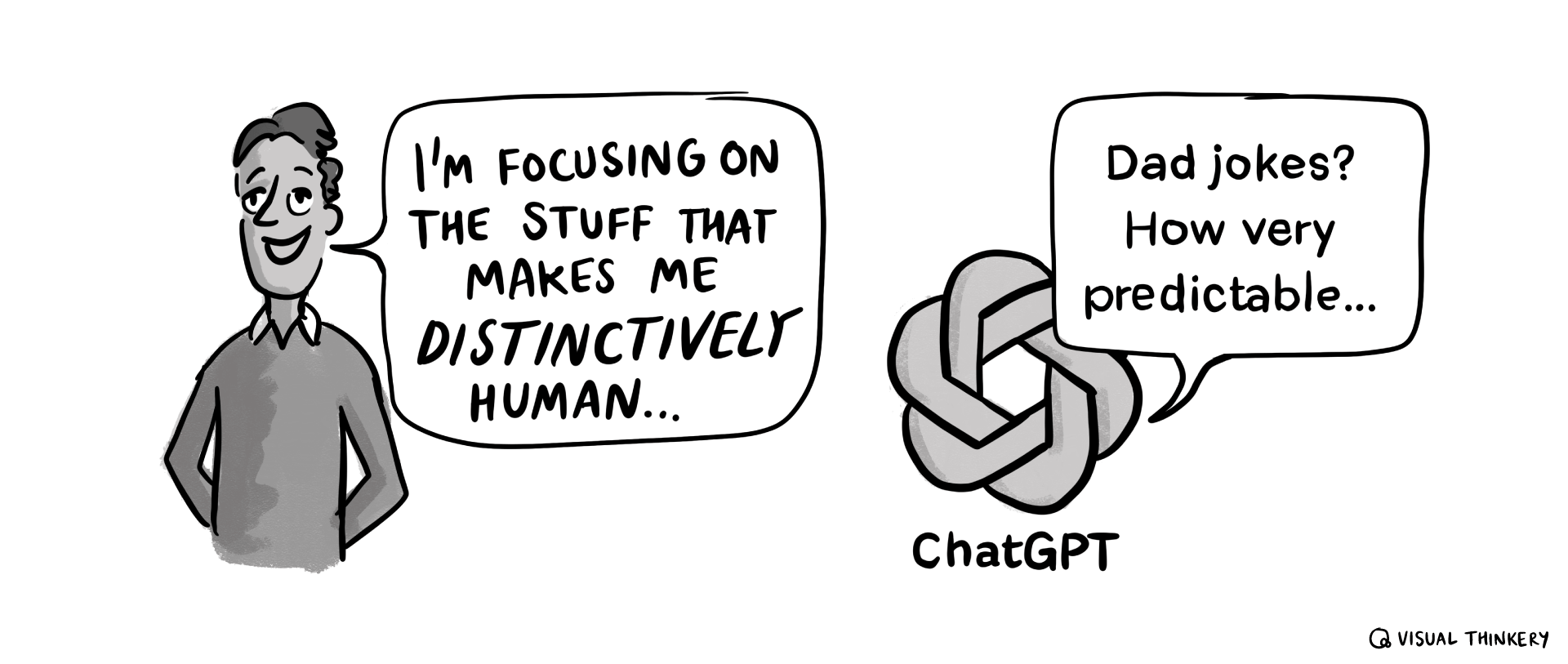
A man says that he's focusing on the things that make him distinctively human. The AI suggests that Dad Jokes are very predictable.

 Distinctively Human by Visual Thinkery

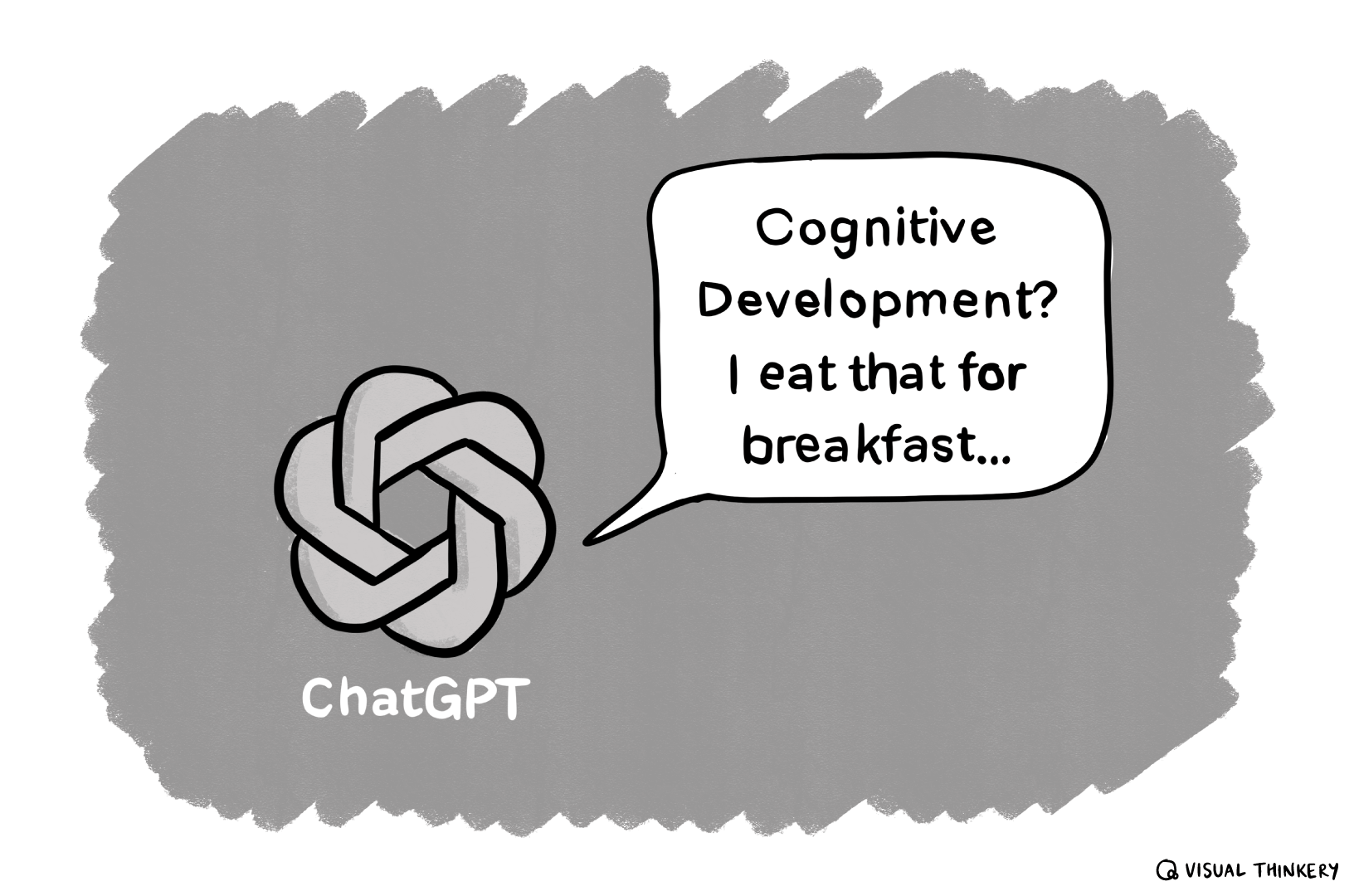
The AI is telling you that it eats cognitive development for breakfast.

 Cognitive Development by Visual Thinkery

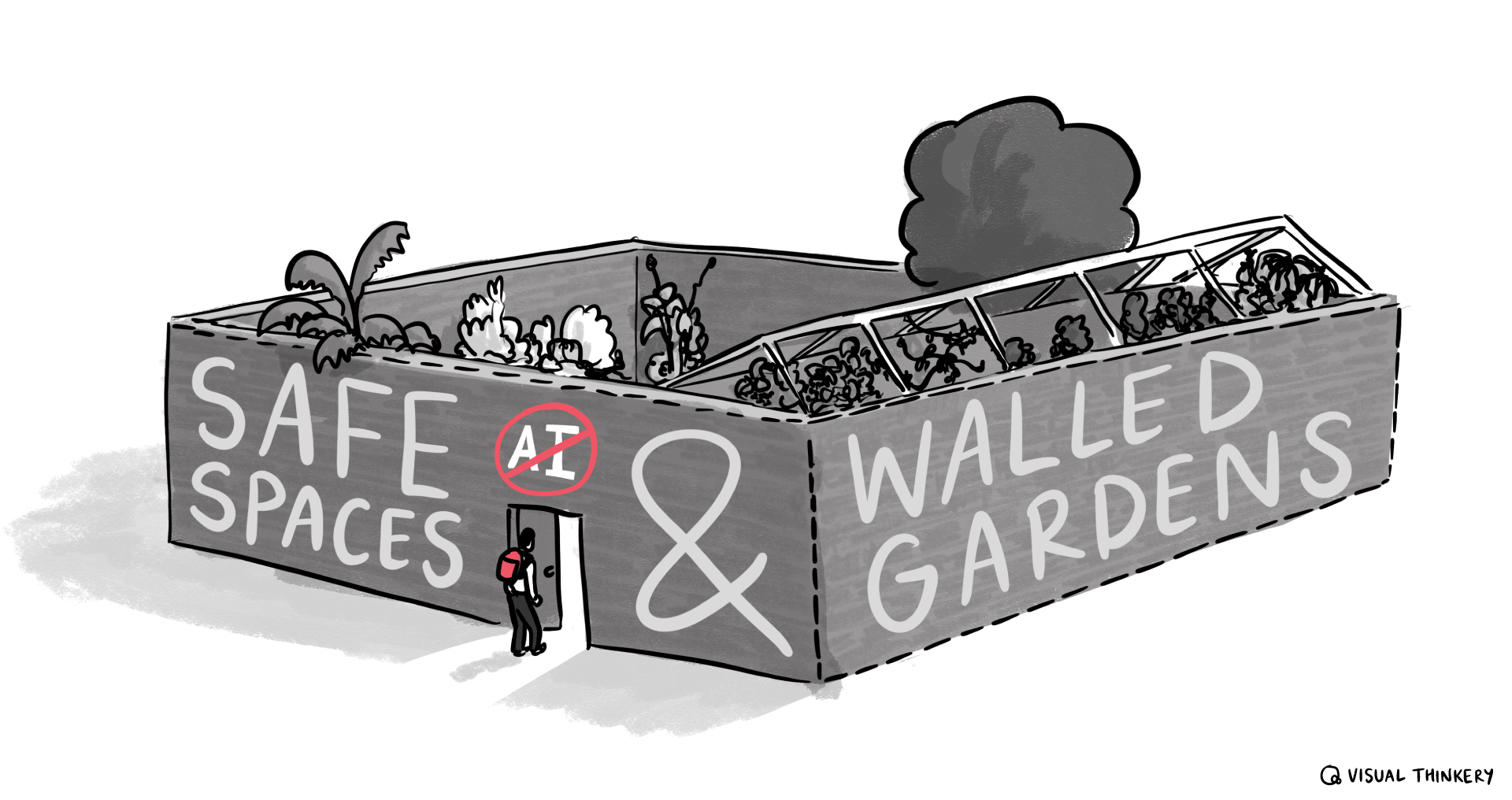
A person walking through the door of a walled garden with the "No AI" sign above the door.

 Safe Spaces and Walled Gardens by Visual Thinkery

An Educator's Repository of Ethical Statements to Opt Out (and other spells)

 An Educators Repository of Ethical Statements by Visual Thinkery

Visually recording a conversation

so you want to record a conversation

Visually recording a conversation

Most of what I create has its roots in conversation.

Open conversation sits at the heart of Visual Thinkery’s “10 ideas” process. Usually I’m able to record it and then go back through and visually harvest the conversation for visual ideas. However, I employ the same tricks when capturing live conversation in a sketchnote. Drawing anything can seem like a conjuring trick – and there’s definitely something to be said for that magical feel. I take a messy conversation as it wisps through the air and I lay it out in a visual landscape for others to wonder at, both during and after the event. An artefact is created from a unique set of people and their thoughts at a single point in time.  

Watching it unfold

Both online and in-person, it’s possible to display what is being captured in real time. But displaying the visualisation of a conversation as it’s being conjured changes the nature of that conversation. People can point to where a previous part of the conversation left off – and add their penny’s worth. Have you been in a meeting where you realise you have a great bit of insight, but the conversation has moved on? Having a visual map allows you to go back, insert a piece in the emerging puzzle and jump back to where the conversation is. It can be a really useful feature when capturing a conversation of a large group.

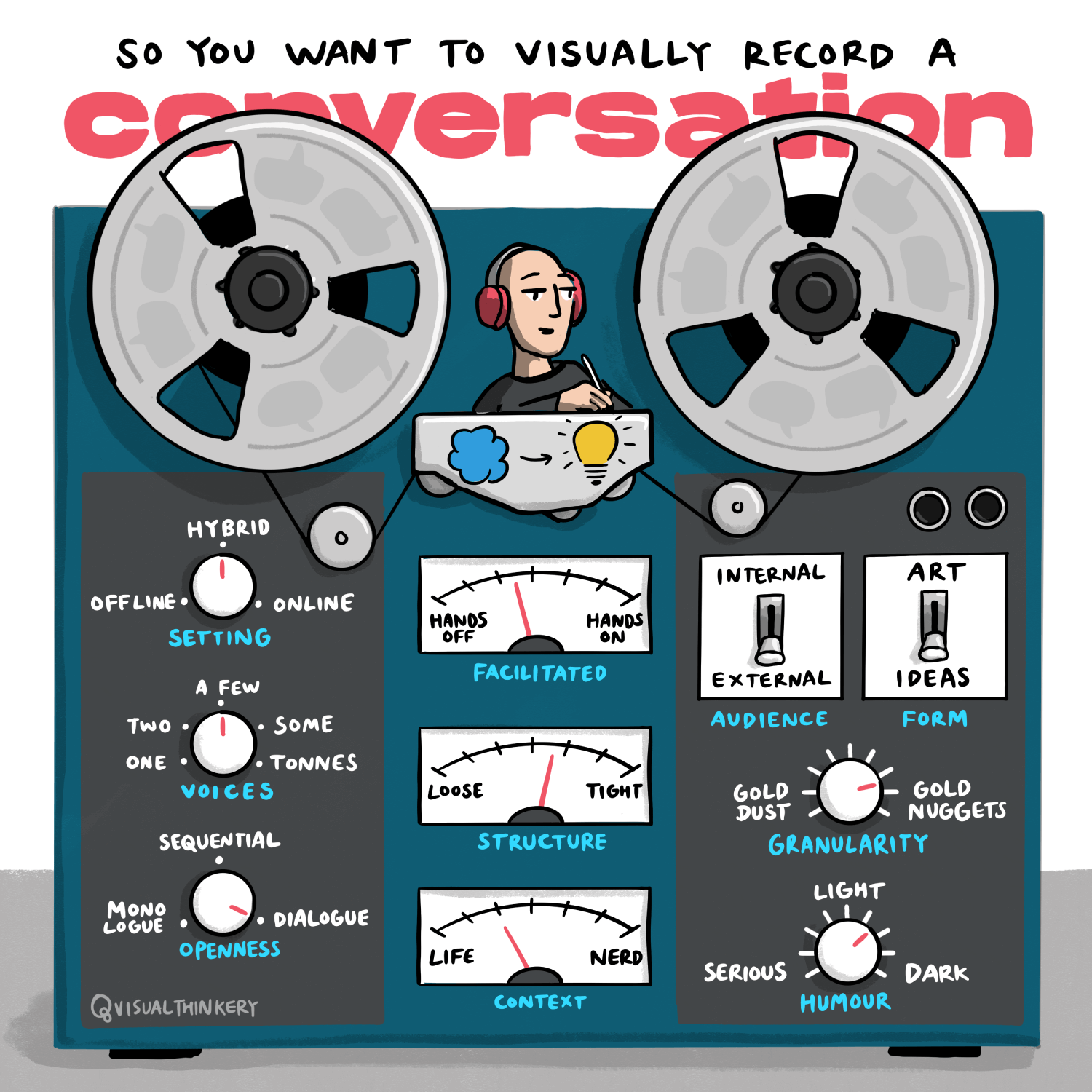
There are a lot of knobs to twiddle when thinking about visually recording a conversational event. Some of which might be fixed depending on the intended output whilst others may be flexible.

Here are a few things to consider:

Setting – Where are people? Does the technology enable everyone to have an equitable input to the conversation?

Voices – How may people will their be? What does this mean for the quality of the conversation?

Openness – How open is the conversation? Will it be a one-way monologue (like a keynote address)? or sequential monologue (like a webinar)? or multi-way dialogue?

Facilitation – How guided with the conversation be? Is there time and persmission to explore tributaries and cul-de-sacs?

Structure – Is there a certain bunch of material that we need to step through? Or certain themes and topics that need to be covered?

Context – How much context do I need in order find meaning in the conversation (or even facilitate it). Can I play the curious idiot or do I need a PhD?

Audience – Who are we ultimately creating for? An internal or external audience?

Form – Where is the priority: to create something pretty? or create something meaningful?

Granularity – Are we trying to capture all the things? Or should we focus on a nugget if come across it?

Humour – a cartoonist’s greatest weapon – how will the conversation encourage the possibility of humour?

Here are a few examples

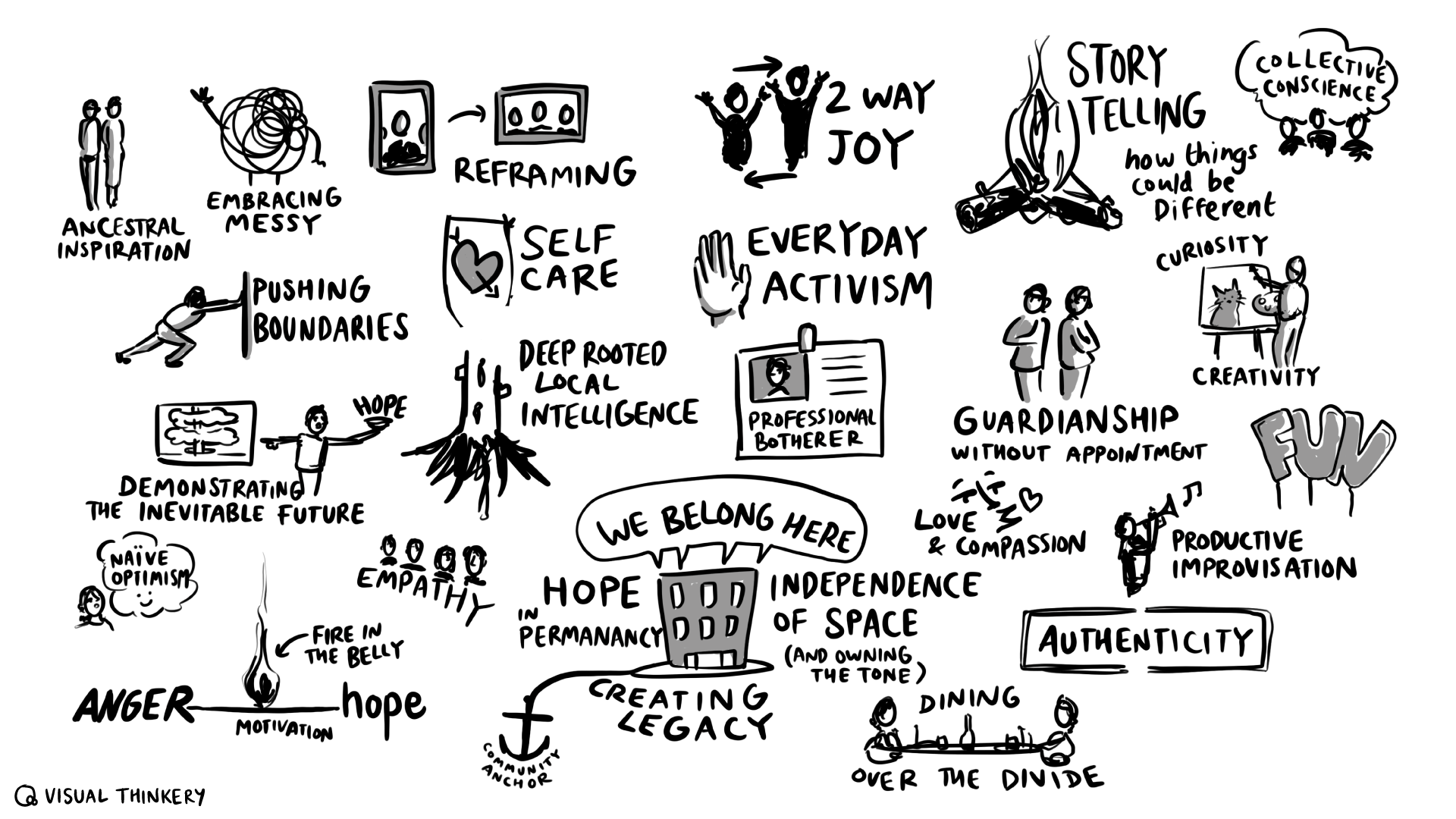
Aligned Values and Behaviours

Facilitated conversation between a group of social activists about what they have in common. 
Setting: offline Voices: some Openness: dialogue Audience: Internal Form:ideas

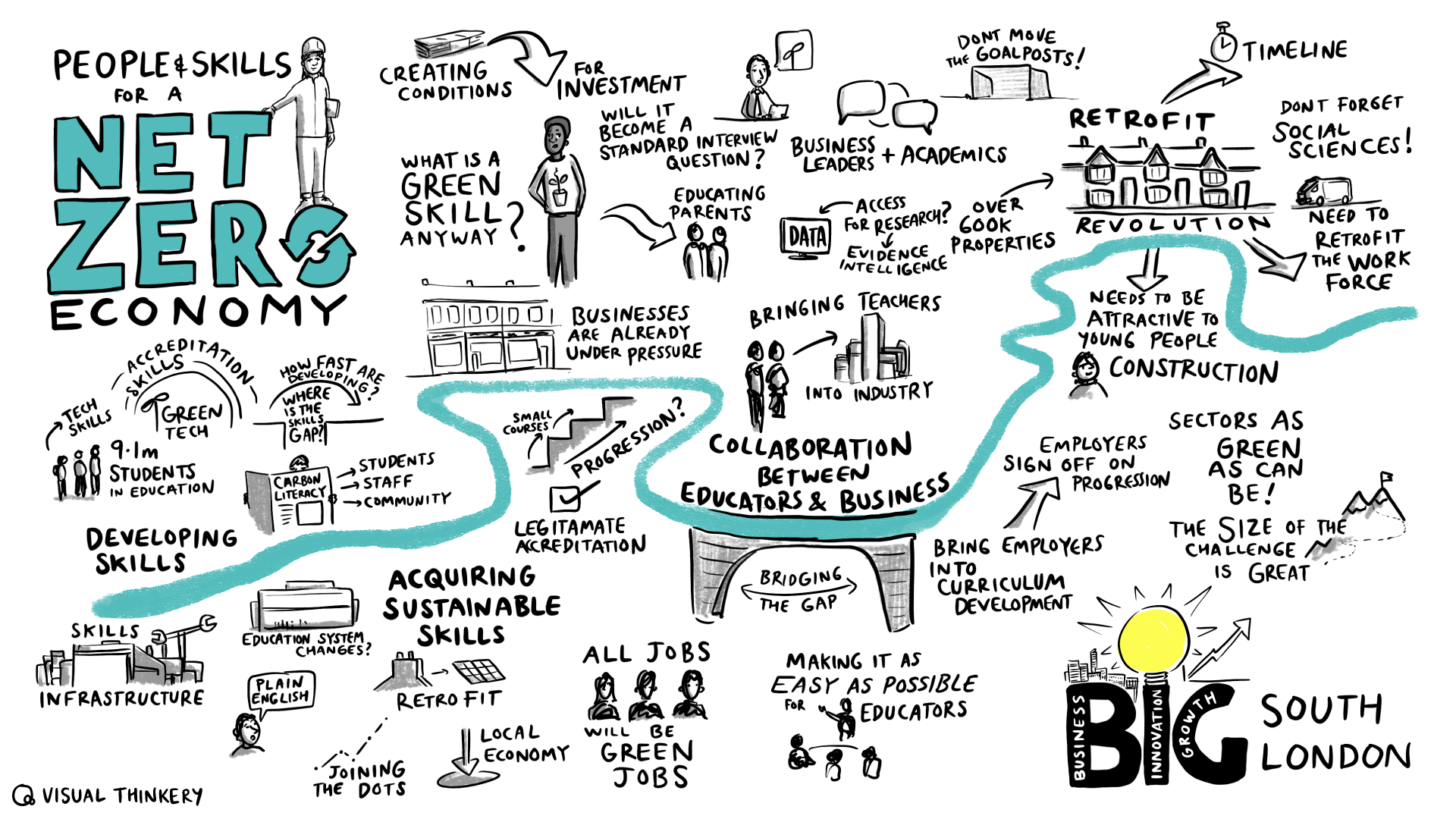
Big South London - Live draw - People and Skills

Panel discussion at all day event.
Setting: offline Voices: a few Openness: sequential monologue Audience: external Form: art

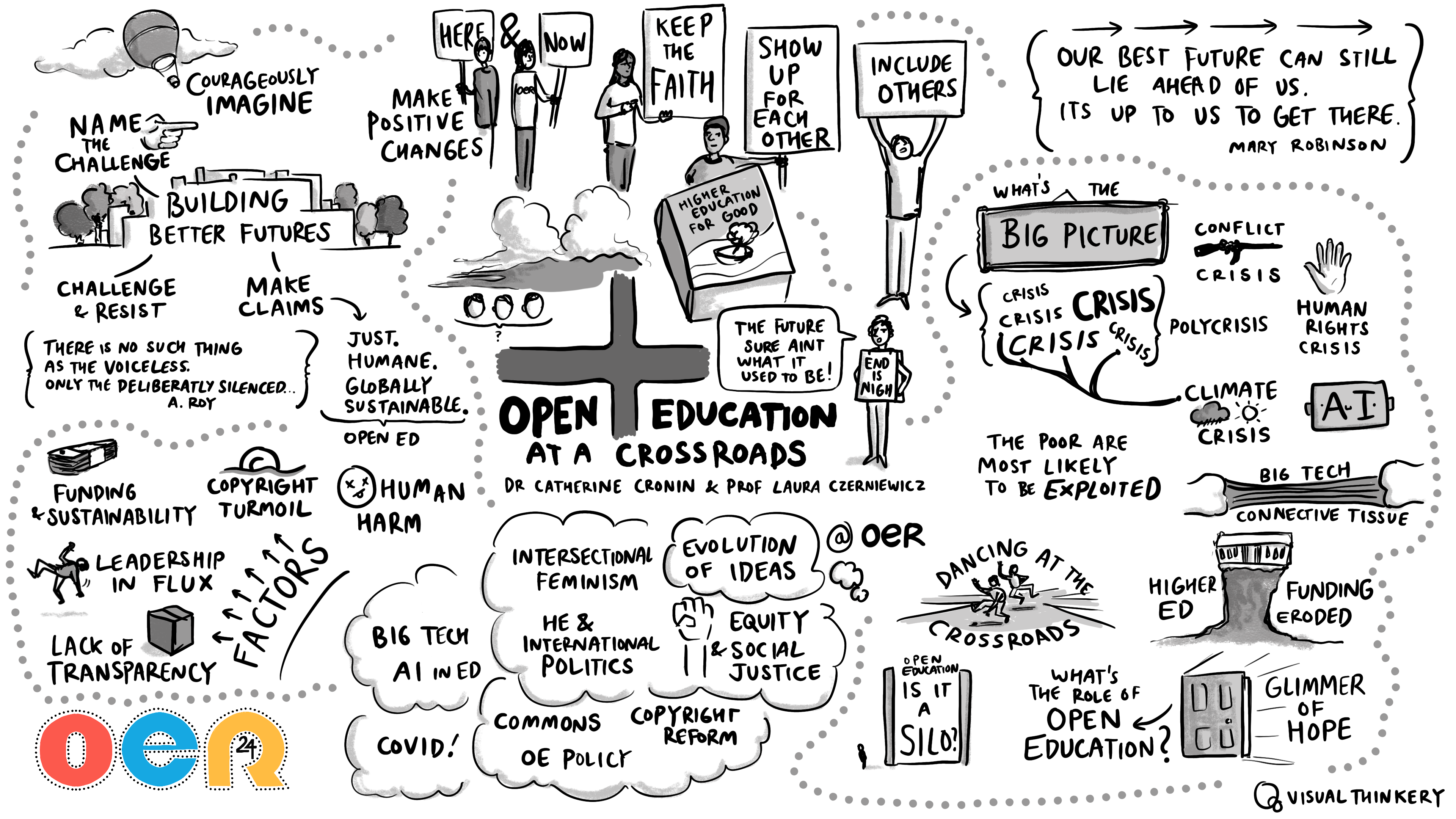
Open Education at a crossroads - Catherine Cronin and Laura Czerniewicz - oer24

Keynote at OER24 conference on Open Education (Cork, Ireland)
Setting: Theatre Voices: one Openness: monologue Audience: external Form: art

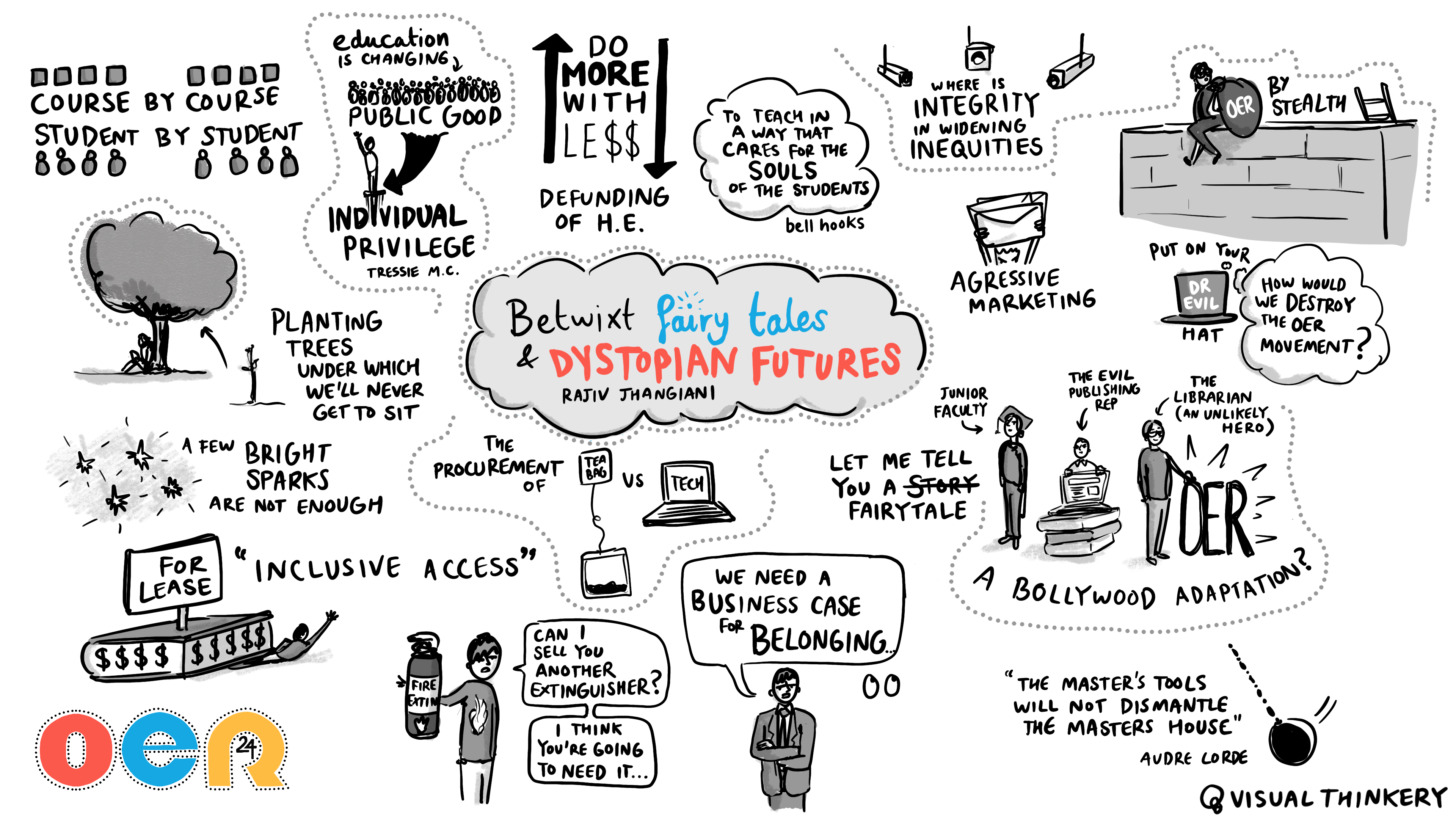
Fairytales and Dystopian futures - Rajiv Jhangiani - oer24

Keynote at OER24 conference on Open Education (Cork, Ireland)
Setting: Theatre Voices: one Openness: monologue Audience: external Form: art

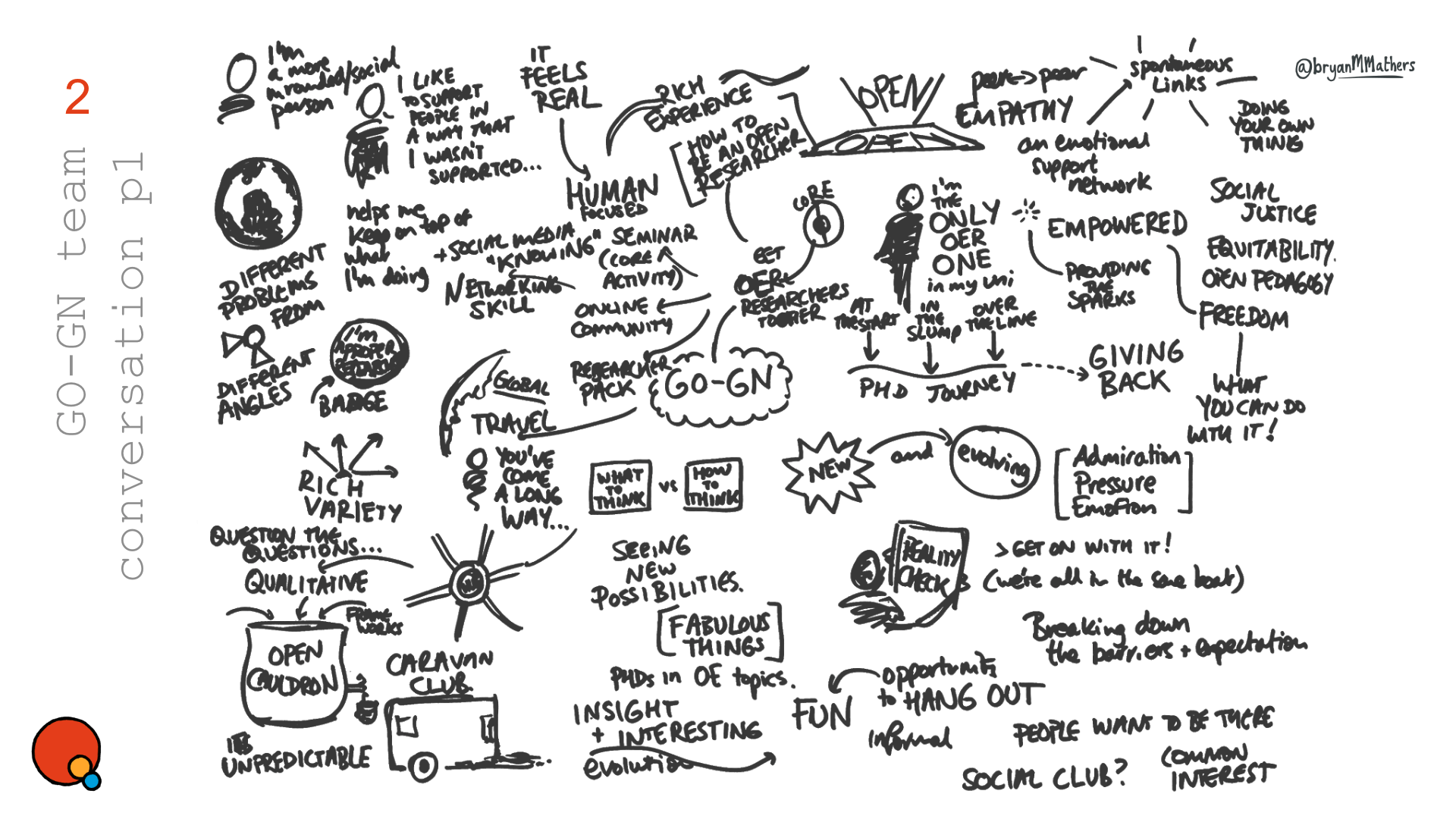
GO-GN conversation

Internal Project Brainstorming conversation
Setting: online Voices: a few Openness: dialogue Audience: internal Form: ideas

If you’d like to talk more – please get in touch!

Documentary Cartooning

Aligned Values and Behaviours

Documentary Cartooning

At a recent two-day gathering where I was busily trying to capture insight in cartoon form, a man came up to me and said – “I’ve figured out what you’re doing – you’re documentary cartooning!”. On reflection, he was quite correct. I’m trying to lean into conversations as they arise and when a visual idea presents itself, I grab it with both hands and let it come to life on my page – documented for others to derive meaning from long after the event has taken place.

For the last few years I have been experimenting with different ways of capturing and documenting live conversation as it unfolds. There are a few different techniques. 

The Conversation Landscape

One way to capture the richness of a group’s thoughts or reflections is to live draw the session as it unfolds. The drawing above represents a 60min reflective session where a group of 25 people had previously split up into small groups to think about shared values and behaviours and write their responses on postcards to help with feeding back to the main group. There was a bit of overlap between groups, so as a point was made, it was grouped with others and group’s audible response gave an indication of resonance. 

Output: Gives the feeling of having collaboratively created something meaningful. After the event it’s a great aide-mémoir for those who were part of the conversation, as technically the conversation has been mapped.

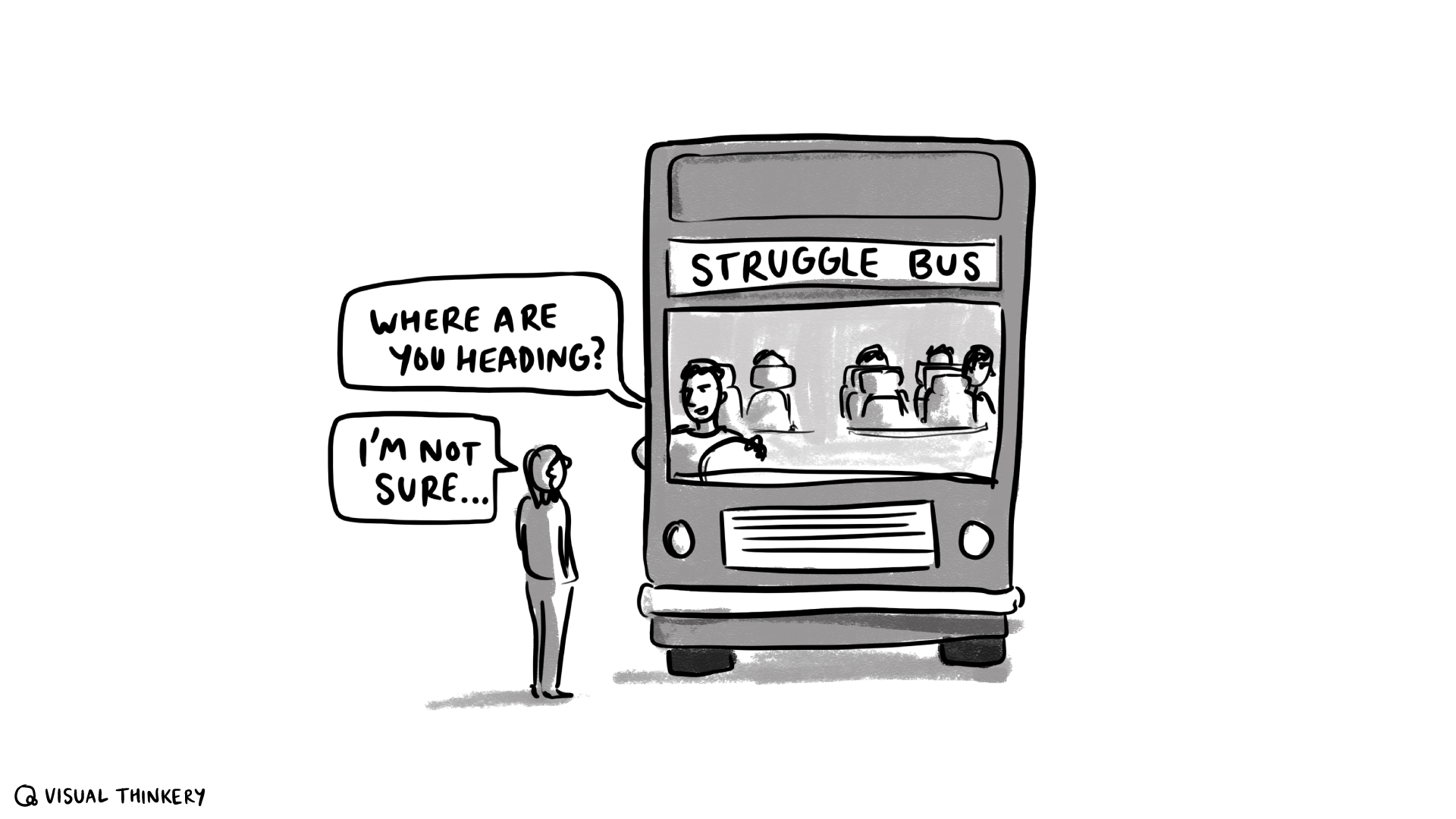
Struggle Bus

Nuggets of Insight

When people get together and share in conversation, nuggets of insight appear amidst their words. Metaphors, humour and storytelling all provide clues as to what the insight could look like as a visual expression. 

The “Struggle Bus” example below is a good example of an off-the-cuff comment that resonated with a room full of social entrepreneurs. It tells a story of how hard it can be to get a social project off the ground – but that we can still get there. And it helps to know that there are others on the bus too! Interestingly, as a visual, there is plenty of productive ambiguity in the cartoon. Am I ready to get on the bus? Maybe if I sit beside the right person, they can help me? Different people will add different meaning.

Output: As individual cartoons, these digital assets can have impact long after the event, and inspire people who weren’t there. They can be a useful hook for a blog post and on social media, and can be made available to the participants to use under a Creative Commons licence.  

Thanks SO much again – your thinkery captured the nuance and metaphor of our dialogue as always, and it’s made the follow-up communications a pleasure to do <3

Bex Trevelyan

Platform Places

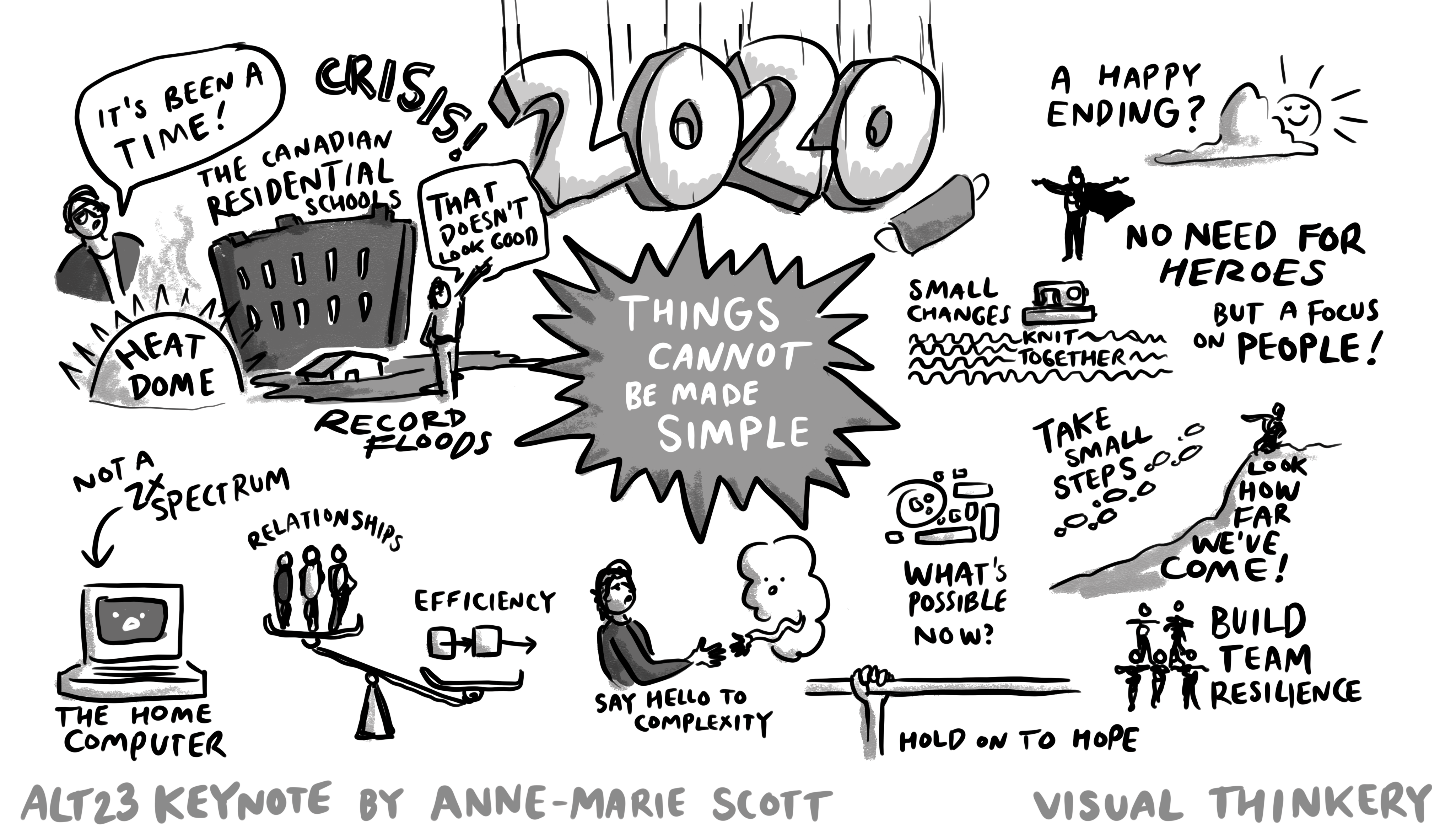
alt23 sketchnote - Anne-Marie Scott

Keynote Sketchnote

A keynote sketchnote is a visual landscape created live while tuning into a person deliver a presentation, usually at a conference. The example above was created during a keynote by Anne-Marie Scott at the ALT conference.

To me, a keynote feels like a journey. There’s usually a defined theme which flows through the presentation. Some pitfalls and highlights. An opening gambit and a measured conclusion. Often there are visual clues provided by the speaker in the way of slides. The challenge here is to be playful with all of the above, and see if it all can be balanced on a single page.

Output: This form of illustration can be a great way of sharing the “gist” of what someone just spoke about to the wider group who might be connected to the event but weren’t able to attend. 

CMALT Principles

CMALT Core Principles

CMALT Principles – a visual language

I always love working with ALT members. Openness is baked into whatever they do, so if I’m trying to capture ideas from dialogue, there is no shortage of members to get involved.

ALT asked if I would help them create a visual language for their CMALT programme, starting with the CMALT core principles.

Dialogue

ALT helpfully organised two remote dialogue sessions (using Google Hangouts), in order to involve a range of people in the collaborative process. Taking each of principles in turn, we discussed members’ understanding of each principle’s meaning and captured it using a live drawing method.

Here are the outputs of both sessions:

As you might spot, different voices produce a different conversation. Principles tend to have a degree of constructive ambiguity, resulting in multiple aligned but varied personal meanings. Of course, the more angles you can view an abstract principle from, the more chance of finding a visual metaphor that might fit.

Distill

The next step is to take those rough ideas and create a number of distilled ideas. This process culminated in the following three routes:


Artwork

The rough sketches allow us to see which of the ideas resonate, and how we can take them further.  In the end, we settled on a mash-up of two of the routes. Here’s the final artwork:

Using a visual language to articulate the core principles of our professional accreditation scheme has had real impact: candidates are now much clearer about what the principles are, more advocates have been able to use the artwork to promote the scheme and there is a stronger visual and strategic connections between this and the overall vision of the Association.

Maren Deepwell

CEO, ALT