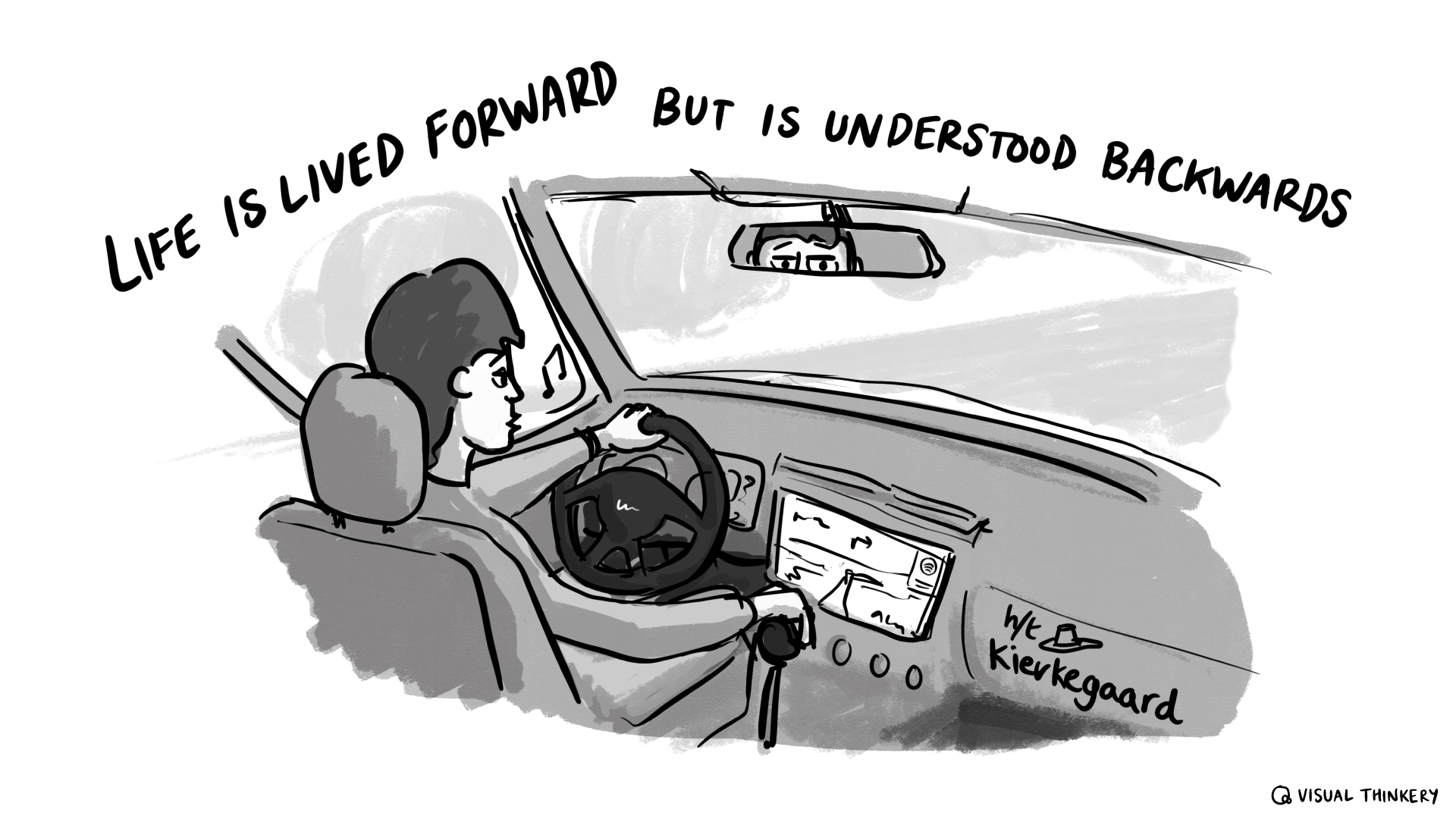
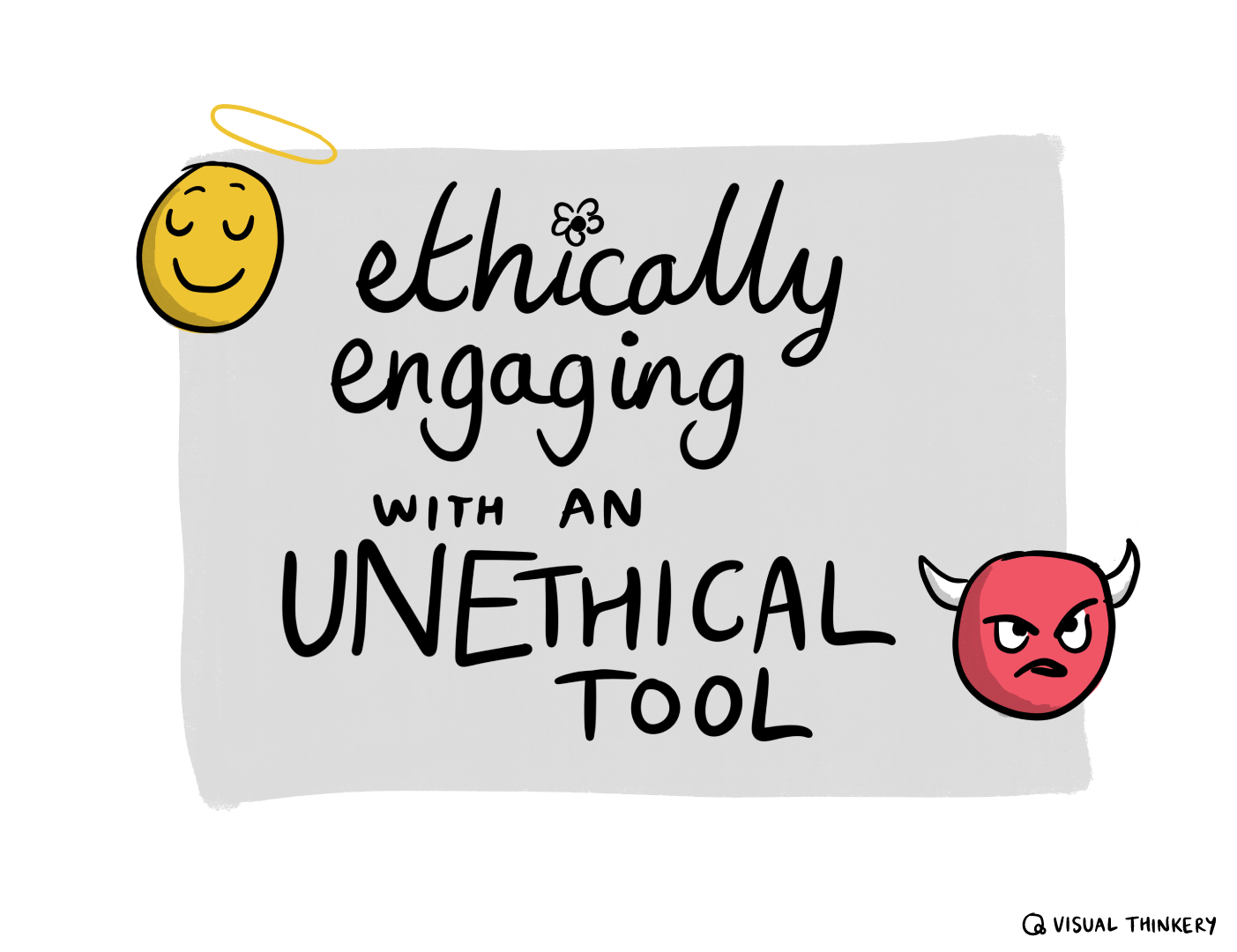
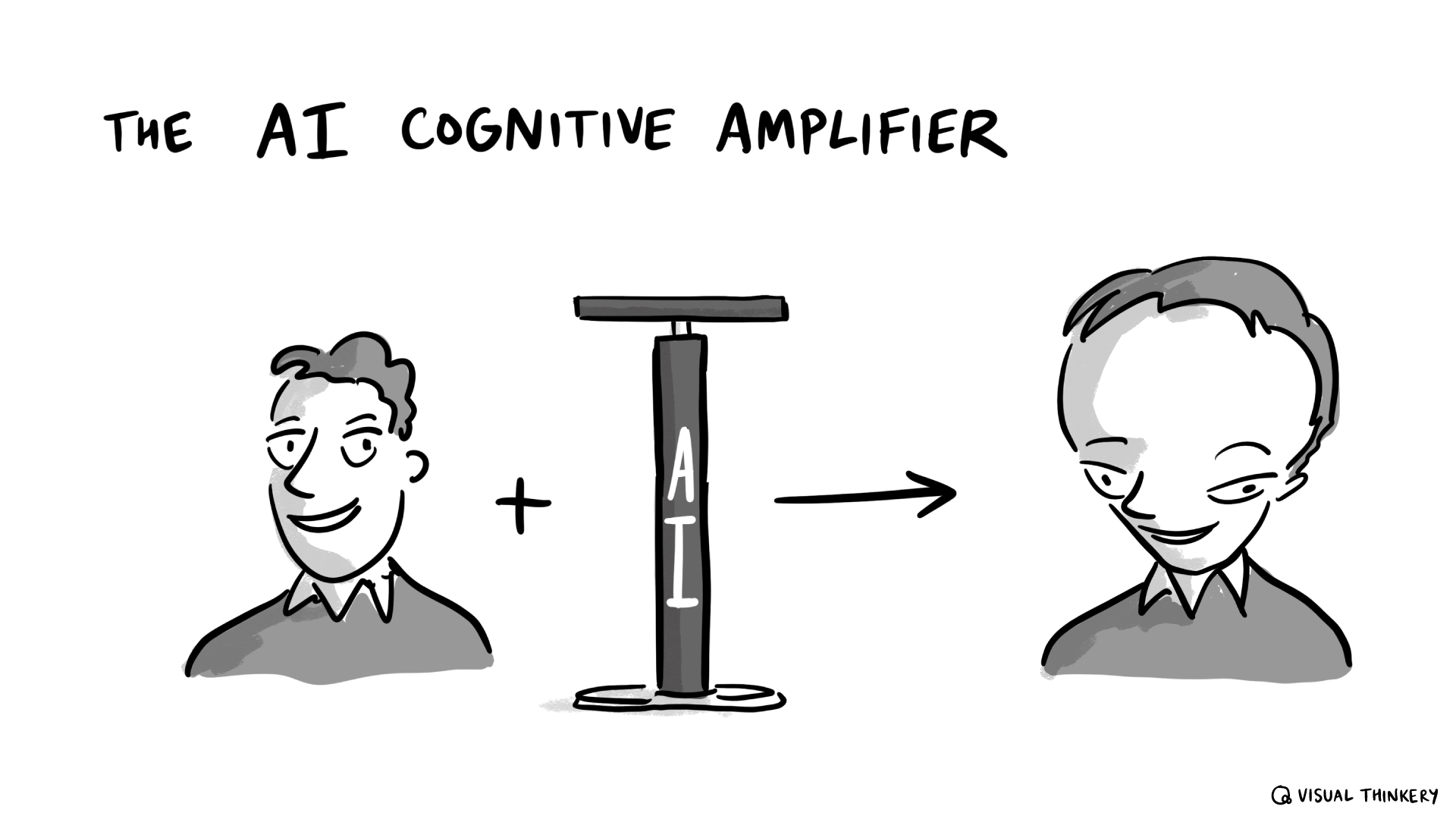
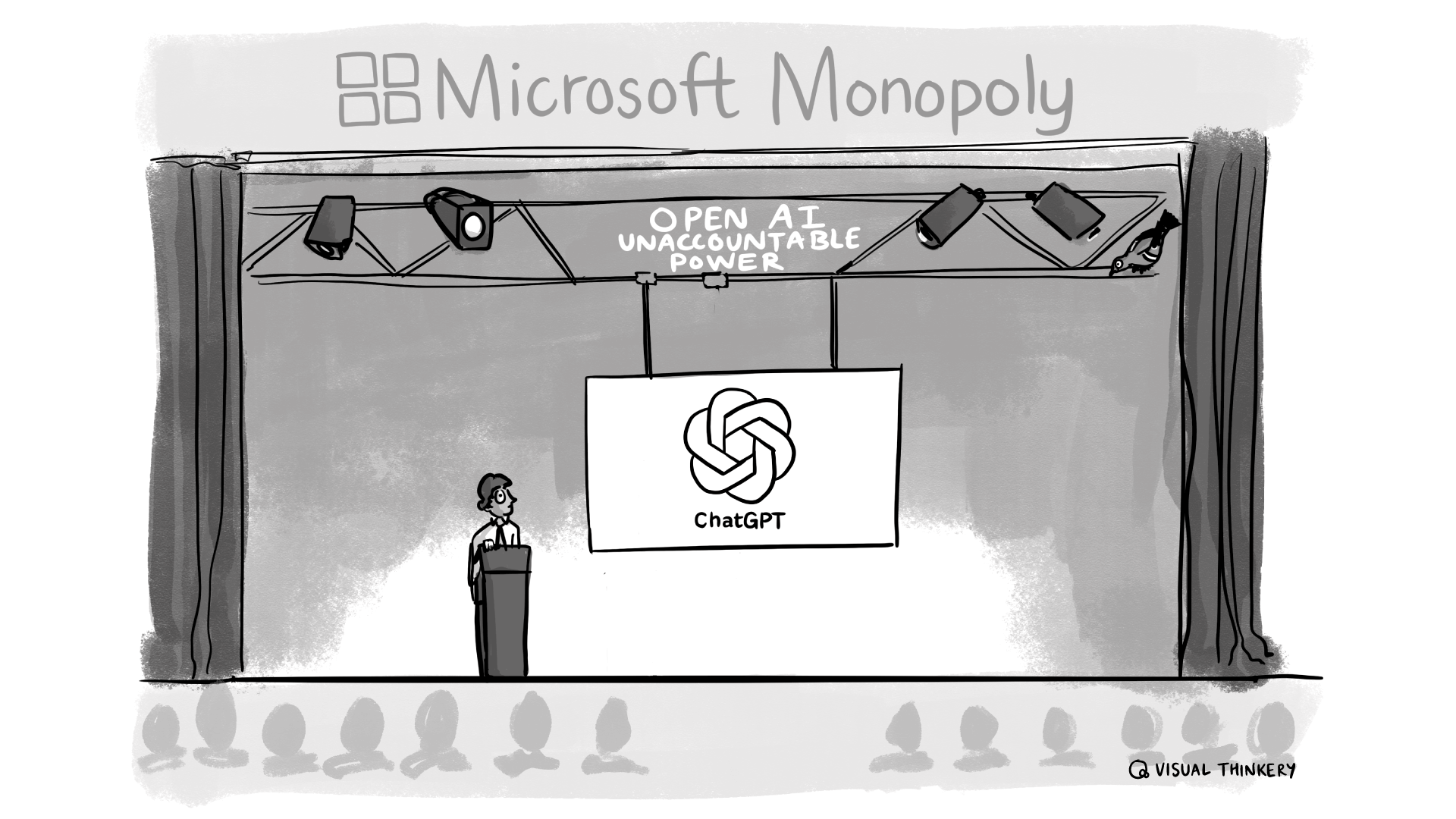
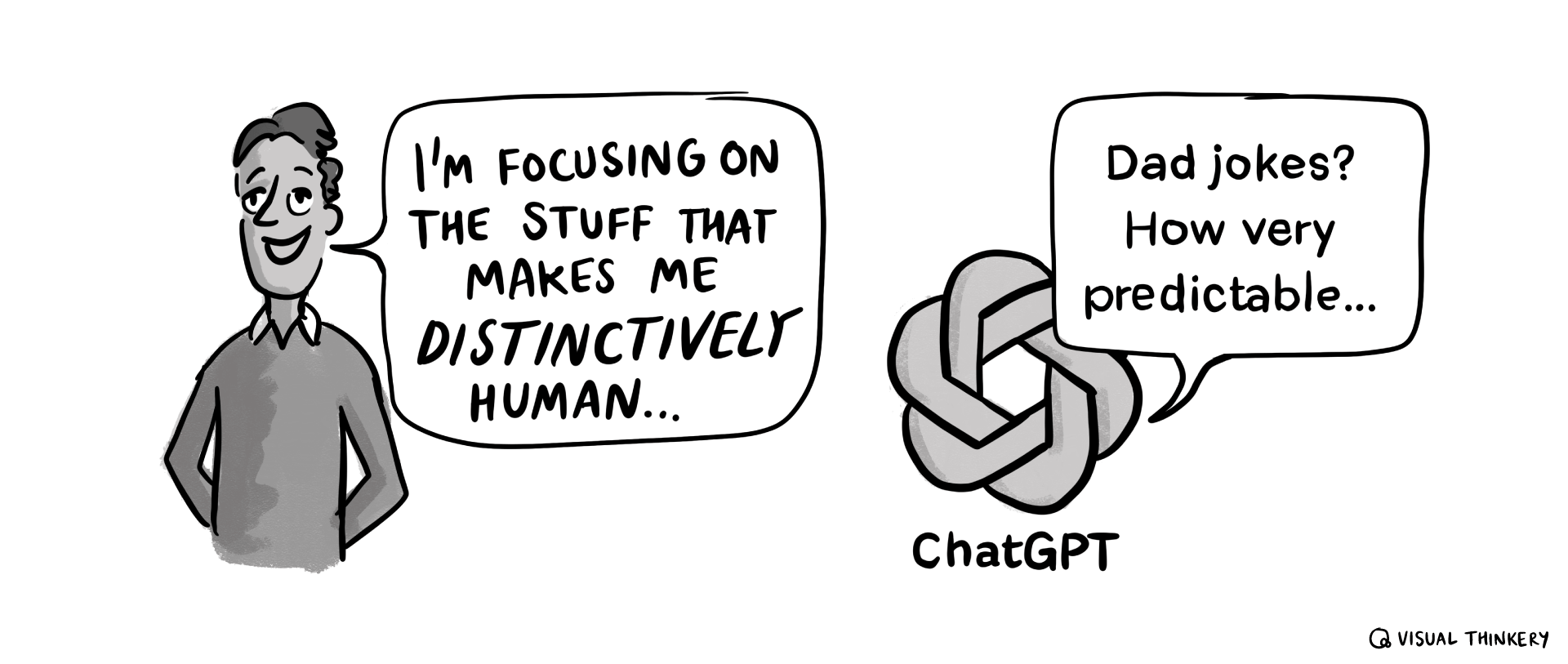
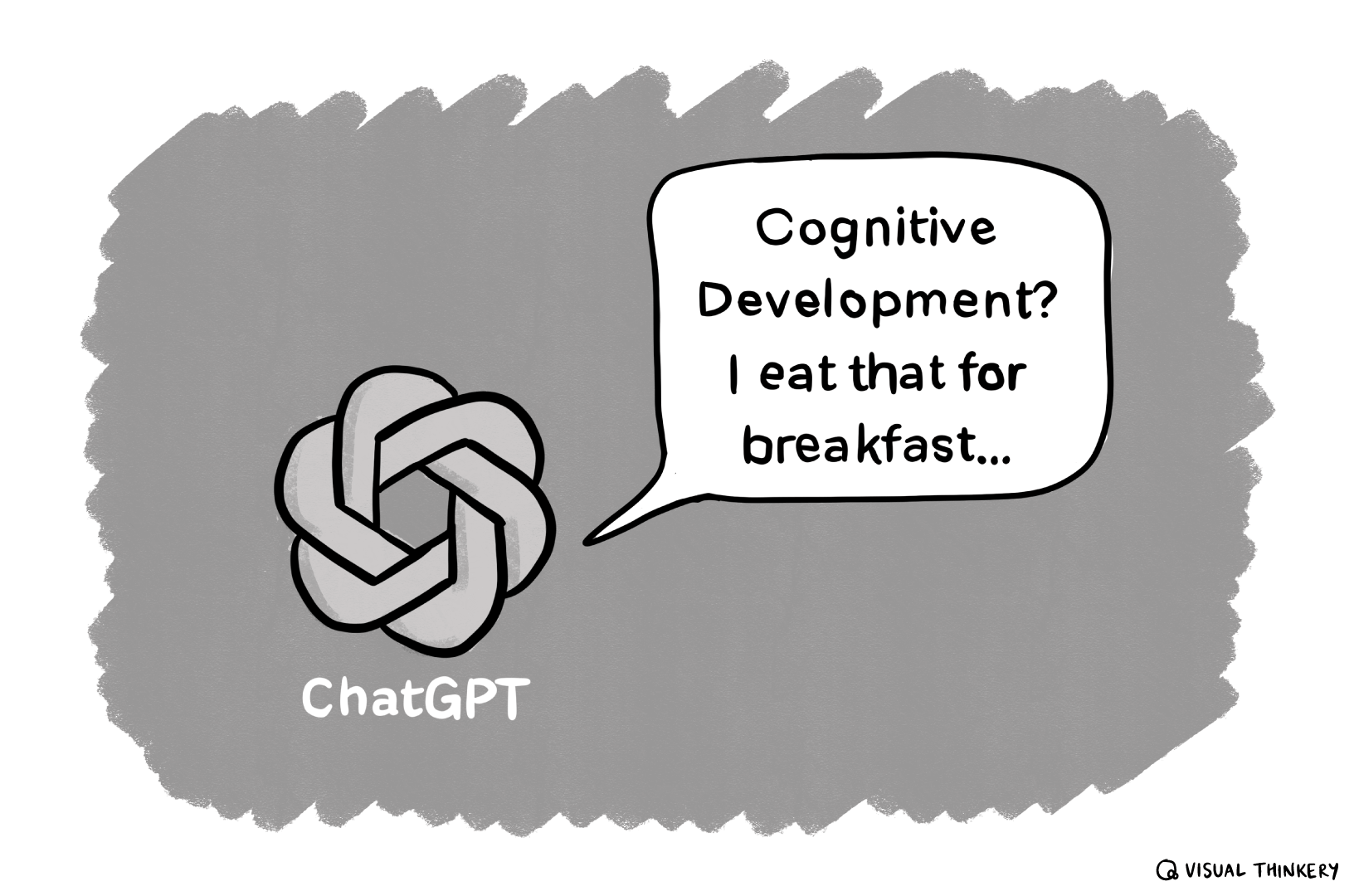
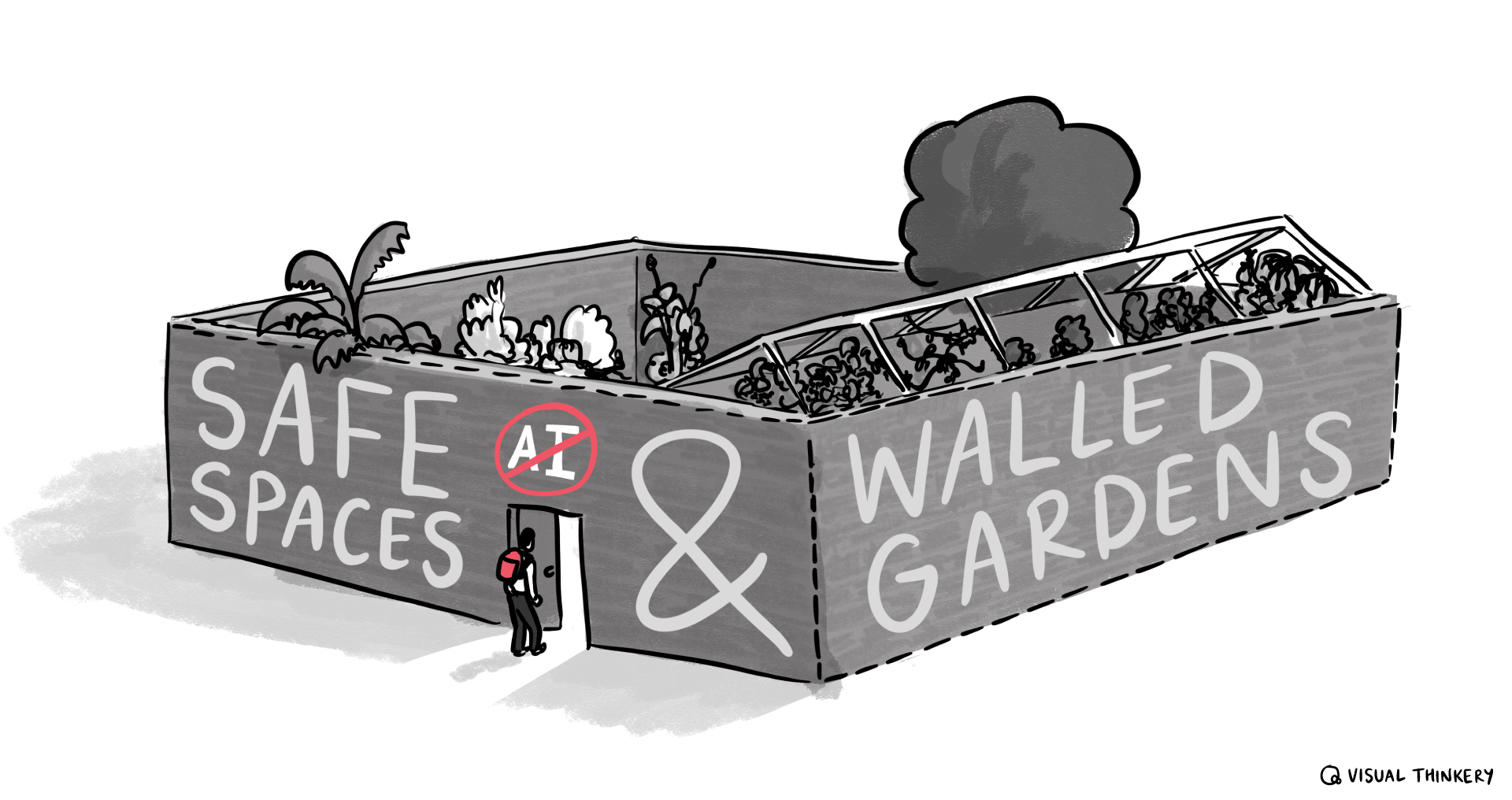
I had the pleasure of live cartooning a webinar on AI and the future of education. facilitated by Doug Belshaw and Laura Hilliger of WeAreOpen Coop. They were joined by fellow thinkers Helen Beetham, Bryan Alexander, Ian O’Byrne and Karen Louise Smith.
The conversation was harvested in real time, using the hybrid approach of capturing ideas on paper during the webinar, and then developing them further afterwards on an iPad.
Some ideas came from the panelists directly, whilst others originated from the chat.
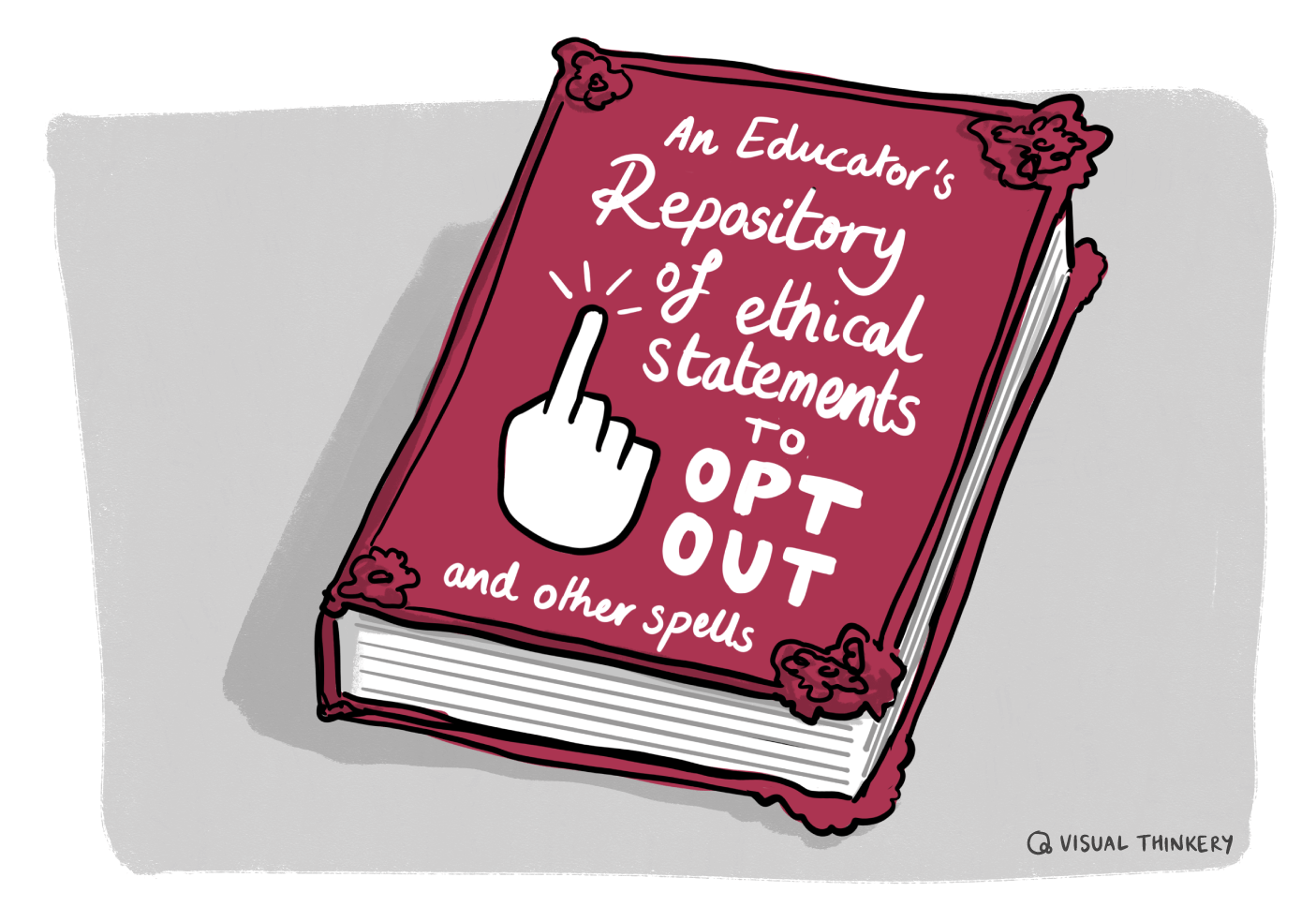
An Educators Repository of Ethical Statements by Visual Thinkery
Visually recording a conversation
Most of what I create has its roots in conversation.
Open conversation sits at the heart of Visual Thinkery’s “10 ideas” process. Usually I’m able to record it and then go back through and visually harvest the conversation for visual ideas. However, I employ the same tricks when capturing live conversation in a sketchnote. Drawing anything can seem like a conjuring trick – and there’s definitely something to be said for that magical feel. I take a messy conversation as it wisps through the air and I lay it out in a visual landscape for others to wonder at, both during and after the event. An artefact is created from a unique set of people and their thoughts at a single point in time.
Watching it unfold
Both online and in-person, it’s possible to display what is being captured in real time. But displaying the visualisation of a conversation as it’s being conjured changes the nature of that conversation. People can point to where a previous part of the conversation left off – and add their penny’s worth. Have you been in a meeting where you realise you have a great bit of insight, but the conversation has moved on? Having a visual map allows you to go back, insert a piece in the emerging puzzle and jump back to where the conversation is. It can be a really useful feature when capturing a conversation of a large group.
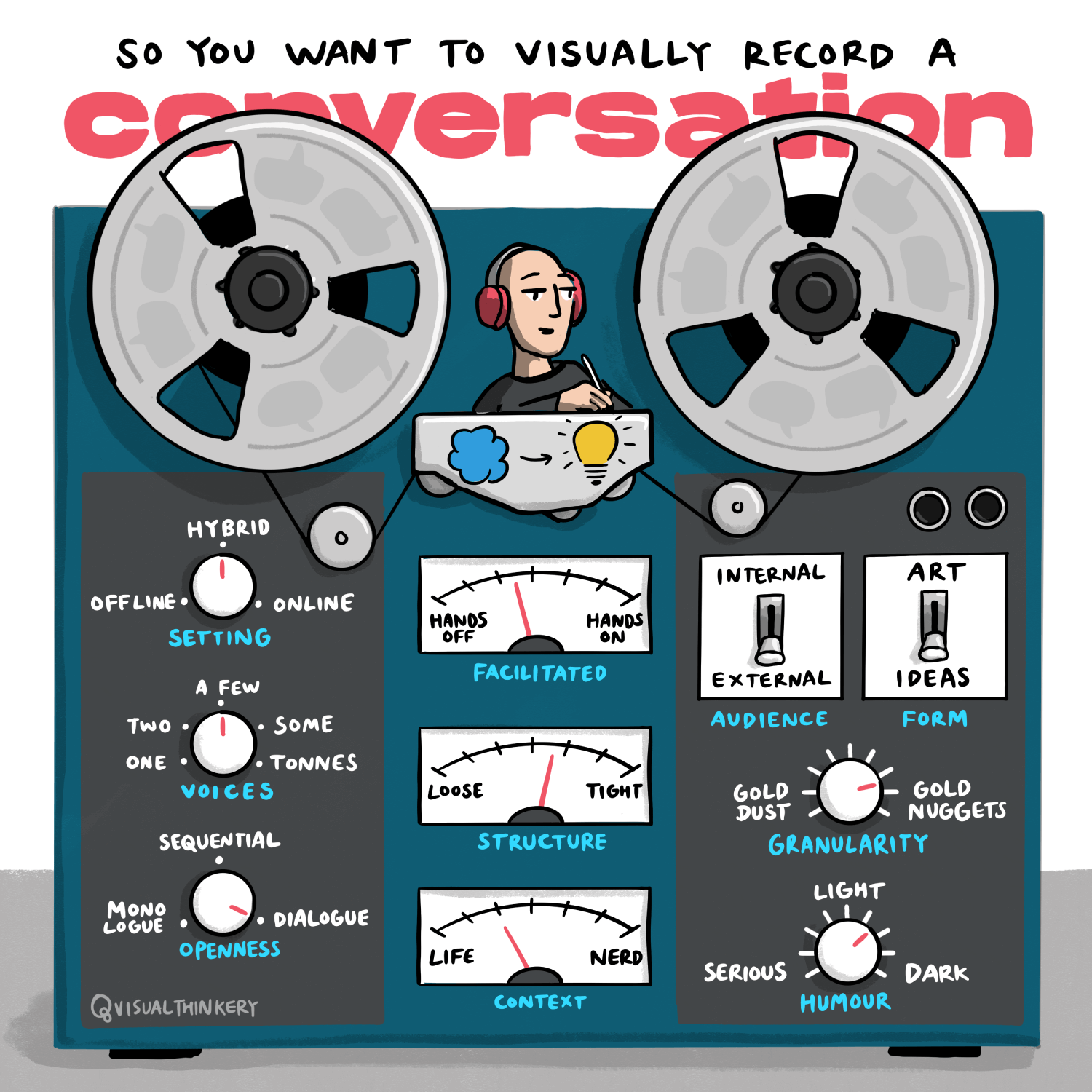
There are a lot of knobs to twiddle when thinking about visually recording a conversational event. Some of which might be fixed depending on the intended output whilst others may be flexible.
Here are a few things to consider:
Setting – Where are people? Does the technology enable everyone to have an equitable input to the conversation?
Voices – How may people will their be? What does this mean for the quality of the conversation?
Openness – How open is the conversation? Will it be a one-way monologue (like a keynote address)? or sequential monologue (like a webinar)? or multi-way dialogue?
Facilitation – How guided with the conversation be? Is there time and persmission to explore tributaries and cul-de-sacs?
Structure – Is there a certain bunch of material that we need to step through? Or certain themes and topics that need to be covered?
Context – How much context do I need in order find meaning in the conversation (or even facilitate it). Can I play the curious idiot or do I need a PhD?
Audience – Who are we ultimately creating for? An internal or external audience?
Form – Where is the priority: to create something pretty? or create something meaningful?
Granularity – Are we trying to capture all the things? Or should we focus on a nugget if come across it?
Humour – a cartoonist’s greatest weapon – how will the conversation encourage the possibility of humour?
Here are a few examples
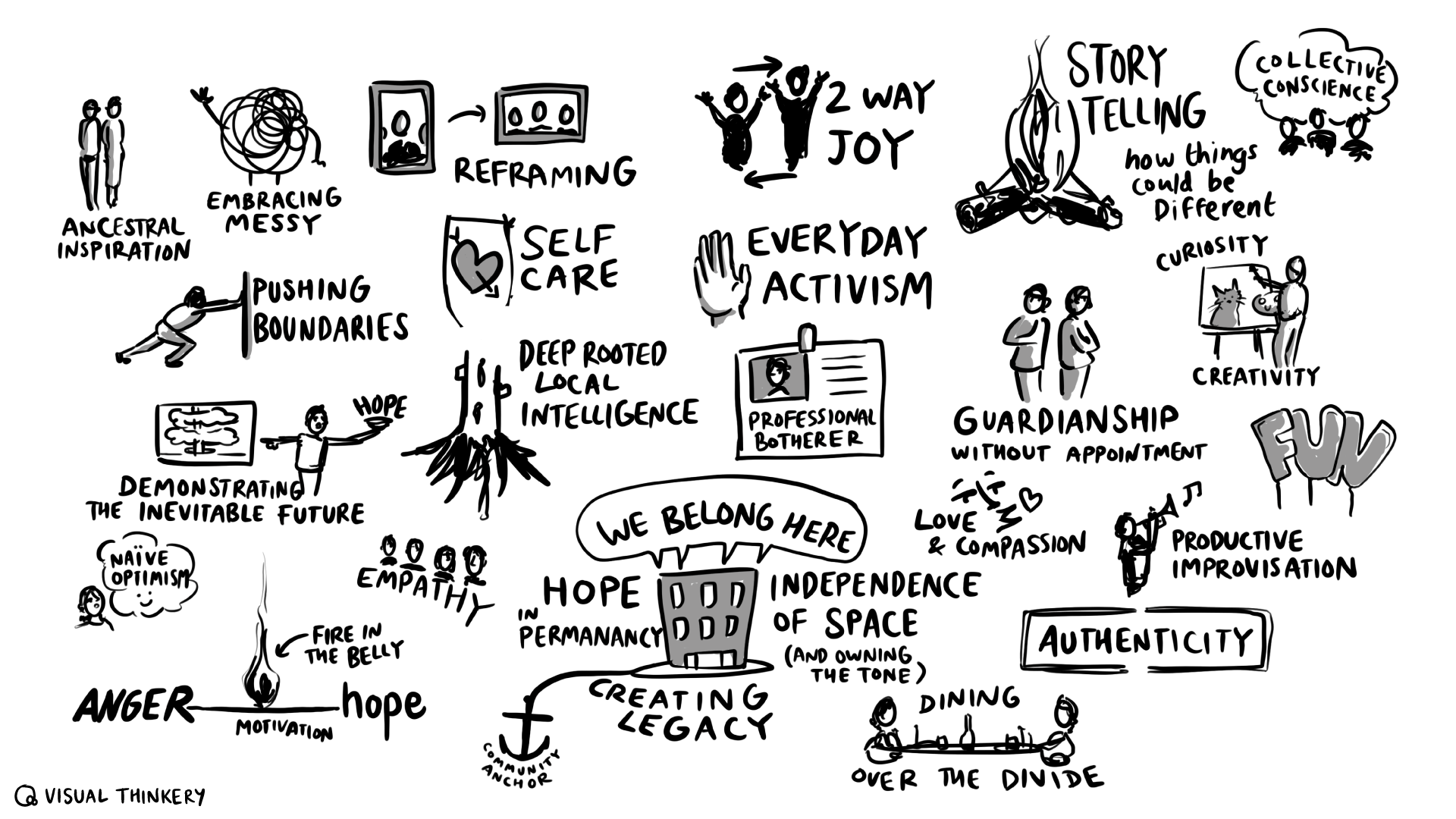
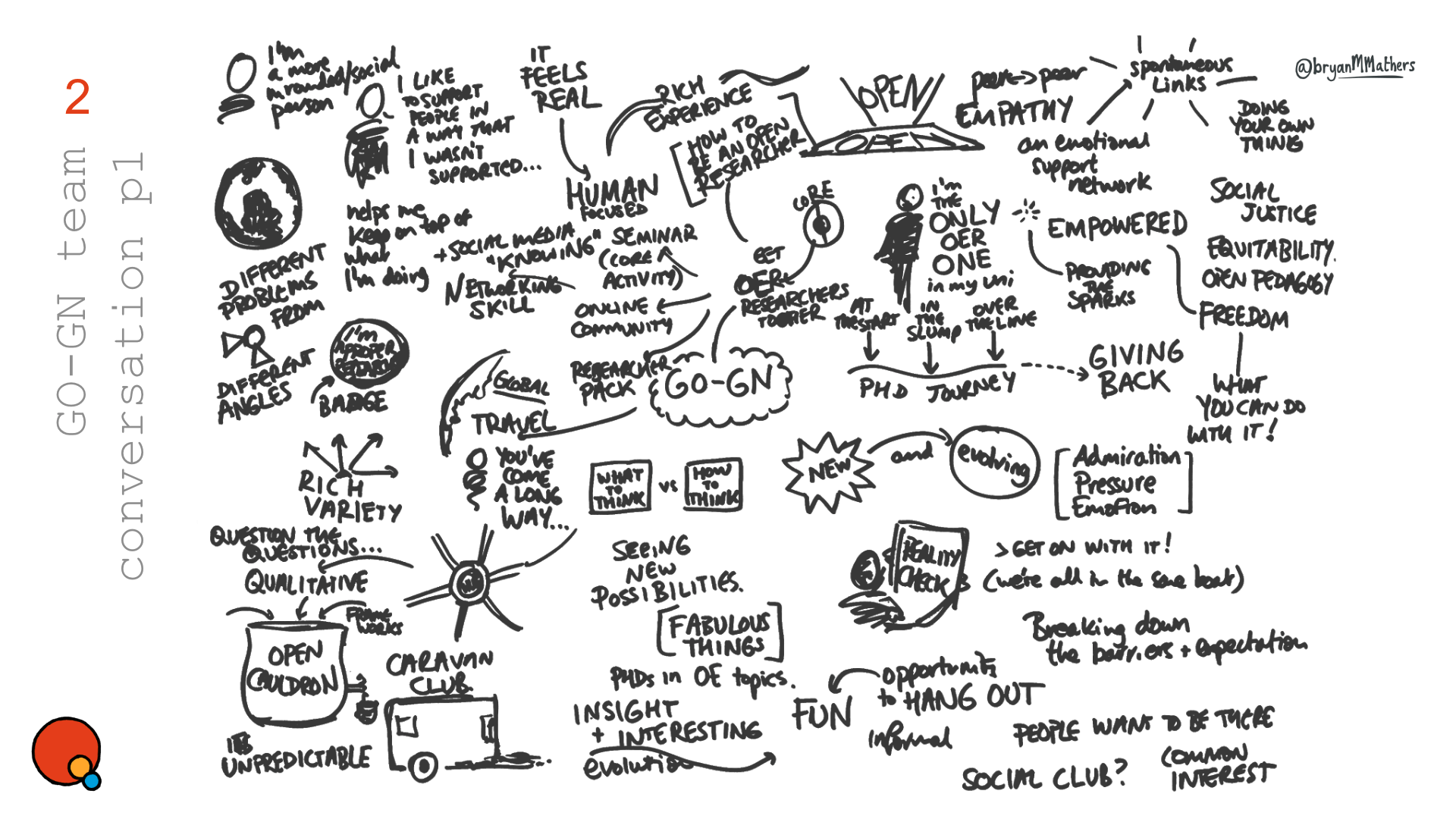
Facilitated conversation between a group of social activists about what they have in common. Setting: offline Voices: some Openness: dialogue Audience: Internal Form: ideas
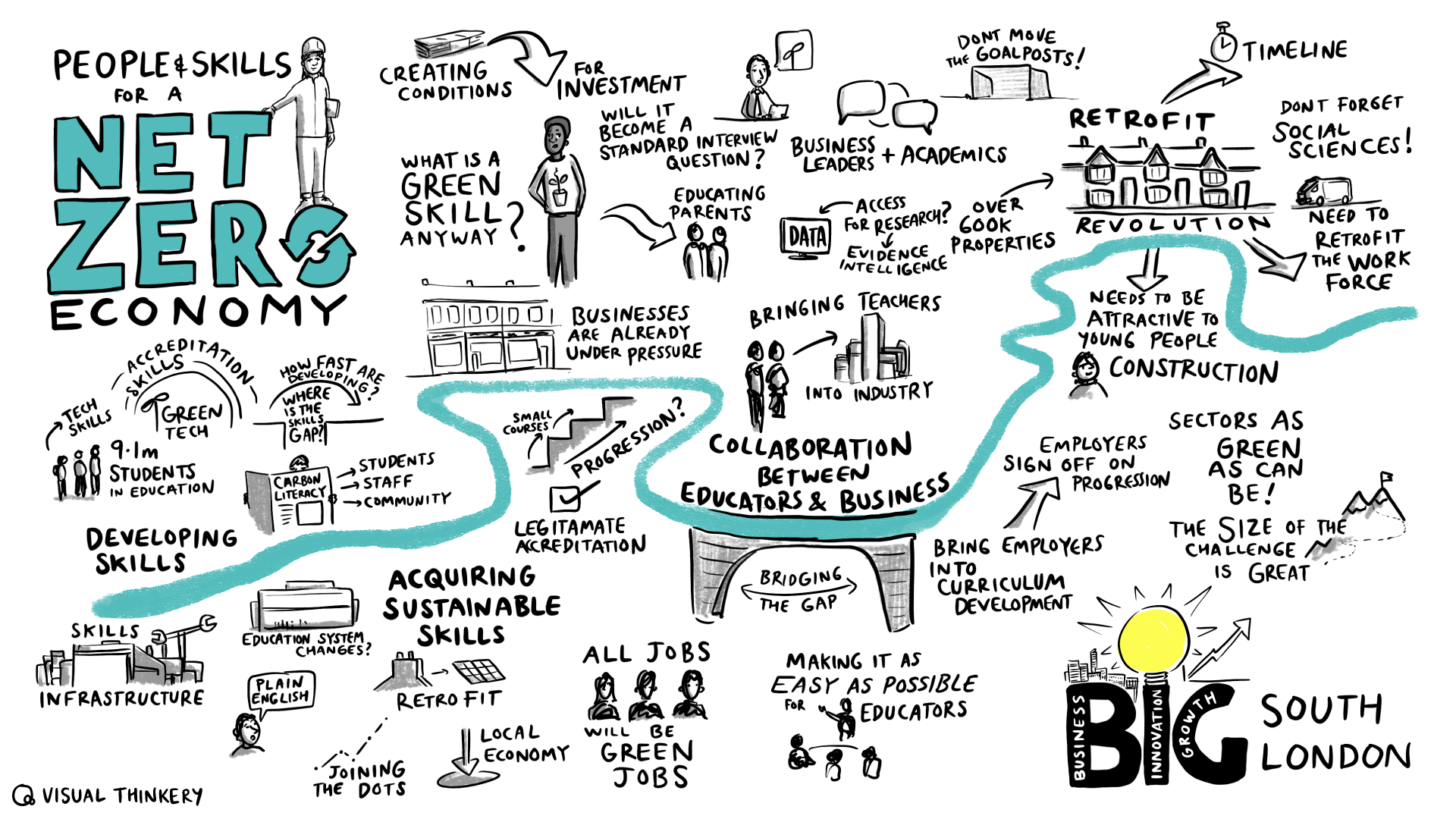
Panel discussion at all day event. Setting: offline Voices: a few Openness: sequential monologue Audience: external Form: art
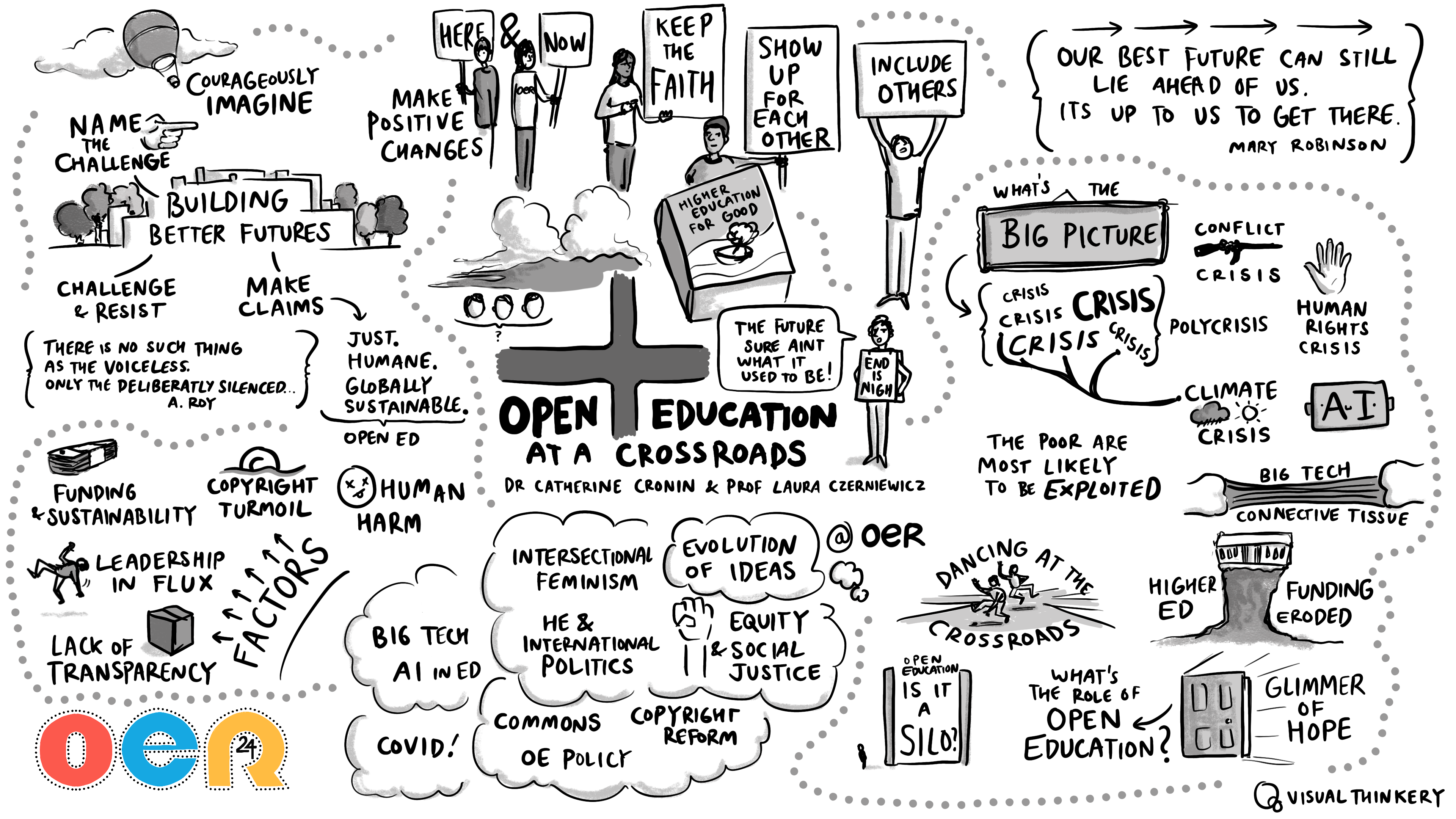
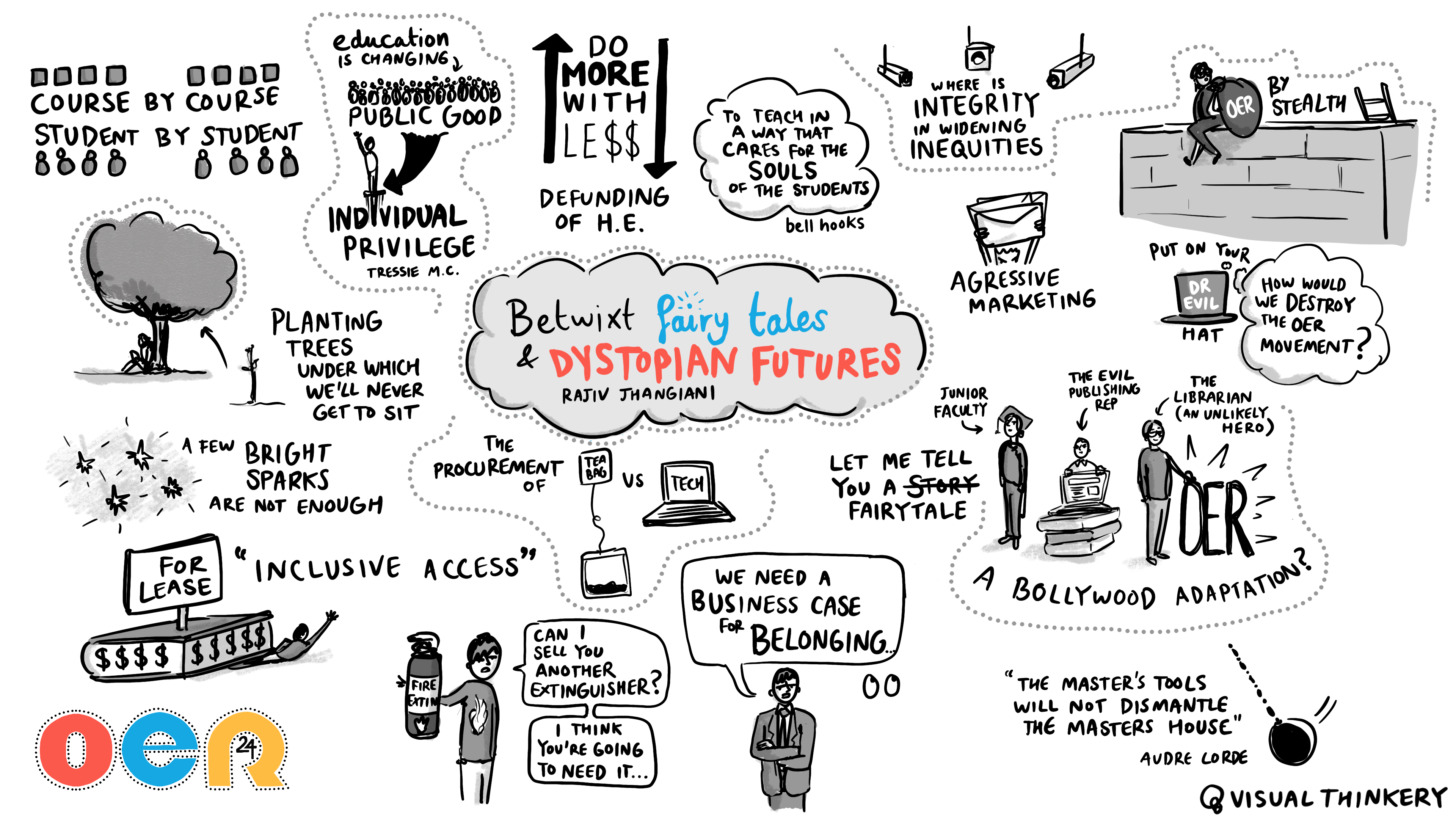
Keynote at OER24 conference on Open Education (Cork, Ireland) Setting: Theatre Voices: one Openness: monologue Audience: external Form: art
Keynote at OER24 conference on Open Education (Cork, Ireland) Setting: Theatre Voices: one Openness: monologue Audience: external Form: art
Internal Project Brainstorming conversation Setting: online Voices: a few Openness: dialogue Audience: internal Form: ideas
If you’d like to talk more – please get in touch!
Cookies
We use cookies to make your experience better by storing and accessing device information.
Functional
Always active
The technical storage or access is strictly necessary for the legitimate purpose of enabling the use of a specific service explicitly requested by the subscriber or user, or for the sole purpose of carrying out the transmission of a communication over an electronic communications network.
Preferences
The technical storage or access is necessary for the legitimate purpose of storing preferences that are not requested by the subscriber or user.
Statistics
The technical storage or access that is used exclusively for statistical purposes.The technical storage or access that is used exclusively for anonymous statistical purposes. Without a subpoena, voluntary compliance on the part of your Internet Service Provider, or additional records from a third party, information stored or retrieved for this purpose alone cannot usually be used to identify you.
Marketing
The technical storage or access is required to create user profiles to send advertising, or to track the user on a website or across several websites for similar marketing purposes.